Chutney Pairing: Best Matches for Indian Dishes
When you think of chutney pairing, the art of matching Indian condiments with meals to enhance flavor, texture, and balance. Also known as Indian condiment pairing, it’s not just about adding spice—it’s about creating harmony on the plate. A good chutney doesn’t just sit beside food; it talks to it. Think of it like salt in soup: too little and the dish feels flat, too much and it overpowers. The right chutney lifts the whole meal.
Chutney pairing works because Indian meals are built on contrast. A crispy dosa, a fermented rice and lentil crepe popular in South India needs the tang of coconut chutney to cut through its richness. A spicy samosa, a fried pastry filled with spiced potatoes and peas cries out for the sweet sharpness of tamarind chutney. Even something as simple as plain roti, a flatbread staple across North India becomes something special with a smear of mint-coriander chutney. These aren’t random combos—they’re traditions refined over generations.
It’s not just about taste—it’s about texture and temperature too. A cool, smooth mint chutney balances the heat of tandoori chicken. A chunky peanut chutney adds crunch to soft idlis. And when you pair a tangy green chutney with a fried snack, it cuts the oil without washing away flavor. That’s the magic. You don’t need fancy ingredients. Just fresh cilantro, tamarind, ginger, or roasted cumin—ground well, mixed right, and served fresh.
Some pairings are universal: coconut with dosa, tamarind with samosa, mint with kebabs. Others are regional secrets. In Maharashtra, people put peanut chutney on pav bhaji. In Bengal, mustard chutney turns simple fish curry into something unforgettable. And in the South, coconut chutney isn’t just for breakfast—it shows up with rice, dal, even grilled veggies.
What makes chutney pairing so powerful is how it turns a meal into an experience. It’s why you’ll see three small bowls on a thali—each one offering a different angle. One for heat, one for sour, one for sweet. You mix, you taste, you adjust. No two bites are the same. That’s the soul of Indian eating.
And if you’ve ever wondered why store-bought chutneys fall flat? It’s because they’re made to last, not to taste. Fresh chutney loses its punch after a day. That’s why Indian homes make it daily. The acidity brightens. The herbs stay green. The texture stays alive. It’s not a condiment—it’s a living part of the dish.
Below, you’ll find real examples of how Indians use chutney every day—not as an afterthought, but as the secret weapon that turns good food into great food. Whether you’re eating idli at breakfast, snacking on pakoras, or finishing a curry with rice, the right chutney makes all the difference.
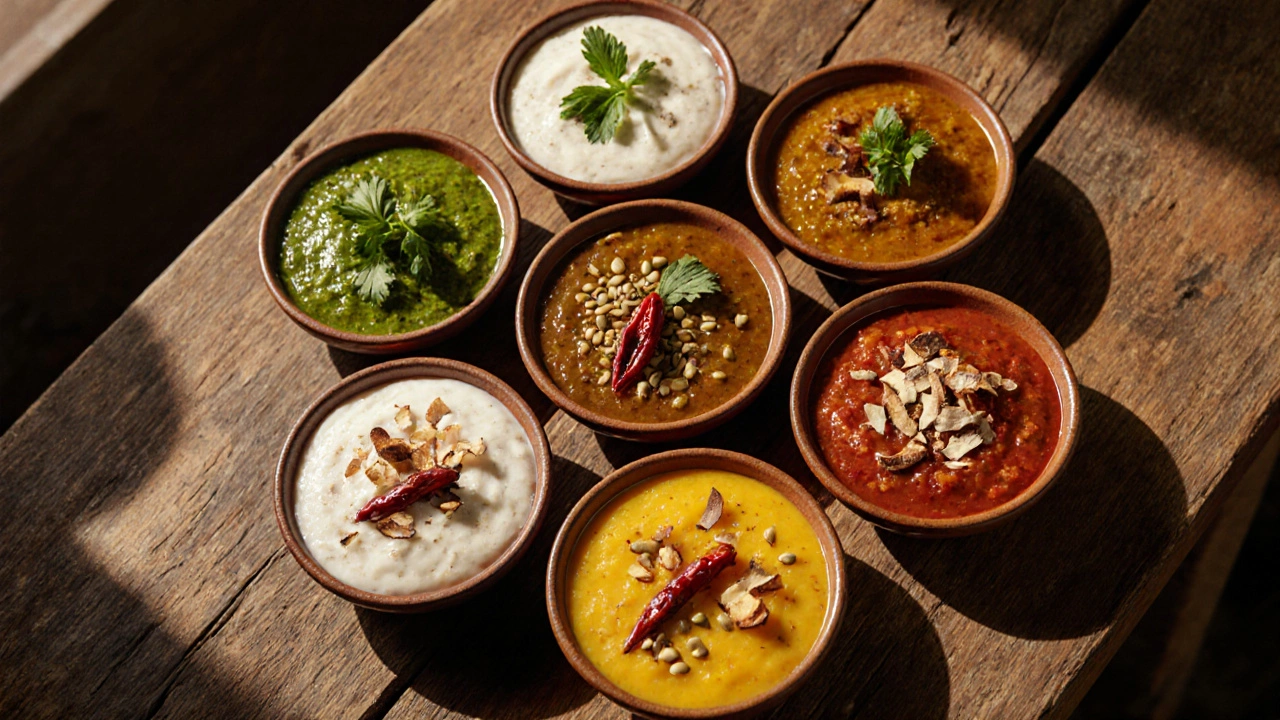
How to Eat Indian Chutney: Pairing Tips & Serving Ideas
Learn how to serve, pair, store, and revitalize Indian chutney with practical tips, quick hacks, and a handy comparison table.
View More