Chutney: The Bold Condiment That Defines Indian Meals
When you think of Indian food, you might picture curry or roti—but it’s the chutney, a vibrant, tangy, or spicy condiment made from fresh ingredients like herbs, fruits, or spices, and used to balance flavors in every meal. Also known as chatni, it’s not an afterthought—it’s the secret weapon in every Indian kitchen. Whether it’s dolloped on a crispy dosa, stirred into a bowl of rice, or served alongside tandoori chicken, chutney doesn’t just accompany food—it transforms it.
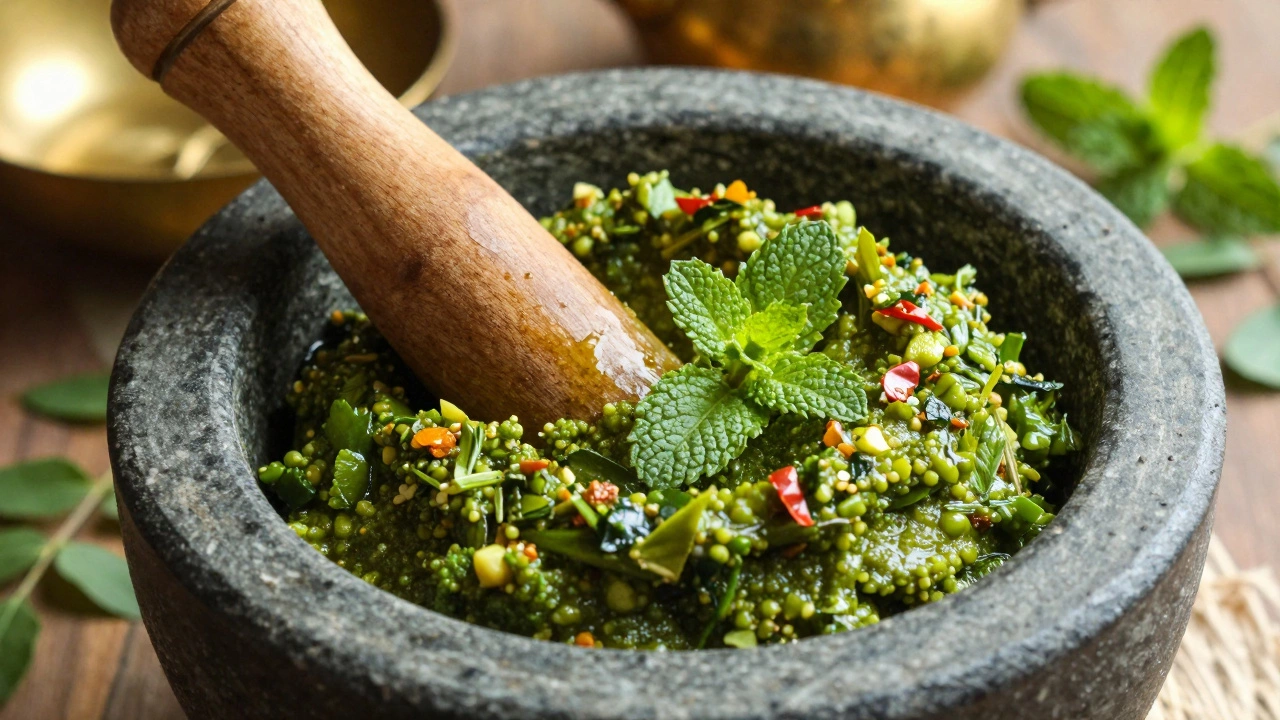
There are dozens of types, each tied to a region, season, or meal. tamarind chutney, a sweet-and-sour paste made from soaked tamarind, jaggery, and spices, is the classic partner for samosas and chaat. Then there’s mint-coriander chutney, a bright green blend of fresh herbs, green chilies, and lemon, used to cut through the richness of fried snacks or grilled meats. Coconut chutney in the south, garlic chutney in Maharashtra, and even peanut chutney in some households—all serve the same purpose: to add punch, balance heat, and refresh the palate.
Chutney isn’t just about taste—it’s about timing and texture. A good chutney should be fresh, not stored for weeks. It’s made in small batches, often right before serving. The acidity from lemon or tamarind helps preserve it, but its magic fades fast. That’s why you’ll find it served fresh at street stalls and homes alike. And while you might think of it as a side, it’s often the reason a dish feels complete. Ever had plain idli? Boring. Now add coconut chutney and sambar. Suddenly, it’s a meal.
Chutney also plays a role in food safety. Its vinegar, garlic, or chili content helps inhibit bacteria—something traditional cooks understood long before modern refrigeration. That’s why it’s common in warm climates. It’s not just flavor—it’s function.
And here’s the thing: you don’t need a recipe to make chutney. You need ingredients you have, a bit of salt, and the willingness to blend. It’s the most democratic part of Indian cooking—no fancy tools, no long prep. Just mash, blend, taste, adjust. That’s why it shows up in every post about Indian breakfasts, snacks, and even tandoori chicken marinades. It’s the invisible thread connecting them all.
Below, you’ll find real tips on how to serve it, what to pair it with, how to store it, and even how to fix a chutney that’s gone too sour or too spicy. No fluff. Just what works.
What Is Chutney Called in English?
Chutney doesn't have an English name because it's a unique Indian condiment with its own flavor profile. Learn why terms like 'sauce' or 'relish' don't capture what chutney really is.
View More
How to Remove Bitterness from Chutney Fast
Too much bitterness can ruin a chutney, but it's not the end of the world. This guide shares practical tricks for taking that harsh edge out of your chutney without having to throw it away. You'll find out why chutney gets bitter, what ingredients and tweaks make a real difference, and learn some smart ways to balance the taste. Plus, there are mistakes to avoid so you don't make it even worse. Save your homemade chutney and get it back to delicious.
View More
What is Chutney Called in America? Understanding the Sweet and Spicy Spread
Ever wondered what Americans call chutney or how it’s used outside India? This article explores the names and uses of chutney in the United States, breaking down how it's found in stores, on menus, and in home kitchens. Discover the differences between Indian chutney and American relishes or preserves. Learn practical tips for using and making chutney-style spreads at home. If you've been confused by words like 'relish,' 'spread,' or even 'salsa,' you'll finally get some answers.
View More
Do Chutneys Need to Cool Before Putting in Jars? What Every Home Cook Should Know
Ever wondered if you should let your homemade chutney cool before jarring? This article answers exactly that and breaks down the science behind cooling and jarring chutneys. Learn the do's and don'ts for safely storing chutney at home. You'll find tips for keeping your chutney fresh and tasty, and ways to prevent spoilage. Avoid common mistakes and step up your chutney game with practical advice.
View More