Boiling Dal: How to Cook Perfect Lentils the Indian Way
When you boiling dal, the process of cooking lentils until tender, often with spices, water, and sometimes tempered oil. Also known as cooking Indian lentils, it's one of the most basic yet crucial skills in Indian kitchens. It’s not just about softening beans—it’s about unlocking flavor, texture, and nutrition in a single pot. Skip the rushed boil, and you miss the soul of dishes like dal tadka, sambar, or simple khichdi.
What makes dal tadka, a classic Indian lentil dish finished with hot oil infused with cumin, mustard seeds, and dried chilies so special isn’t the lentils alone—it’s the tempering. That sizzle of spices in ghee or oil at the end transforms plain boiled dal into something deeply aromatic. And moong dal, a yellow lentil that cooks fast and is easy to digest is the most common starting point, but masoor dal, toor dal, and chana dal each bring their own texture and flavor. You can’t treat them the same. Moong dal breaks down into creaminess; toor dal holds shape better; chana dal needs longer soaking. Get this wrong, and your dal turns mushy or chalky.
Water ratios matter. Too little, and it burns. Too much, and you’re left with watery soup. Most Indian cooks use 3 parts water to 1 part dal, but that changes if you’ve soaked it. Soaking isn’t optional—it cuts cooking time, reduces gas, and improves nutrient absorption. And don’t forget the pinch of baking soda if your water is hard. It’s not cheating—it’s tradition.
The real secret? Don’t boil hard. Simmer low and slow. A rolling boil breaks the lentils too fast and makes them bitter. Let the steam do the work. Add salt only after the dal is soft—adding it early toughens the skins. And when you finish with your tadka, let it sit for five minutes. That’s when the flavors marry.
Boiling dal isn’t fancy. But it’s the foundation of countless meals across India—from breakfast khichdi to dinner bowls with rice. It’s the dish that feeds families, soothes stomachs, and stays warm for days. If you master this one thing, you’ve unlocked the rhythm of Indian home cooking.
Below, you’ll find real recipes and tips from people who cook dal every day—no shortcuts, no fluff. Just how to make it right, whether you’re using a pressure cooker, pot, or stove.
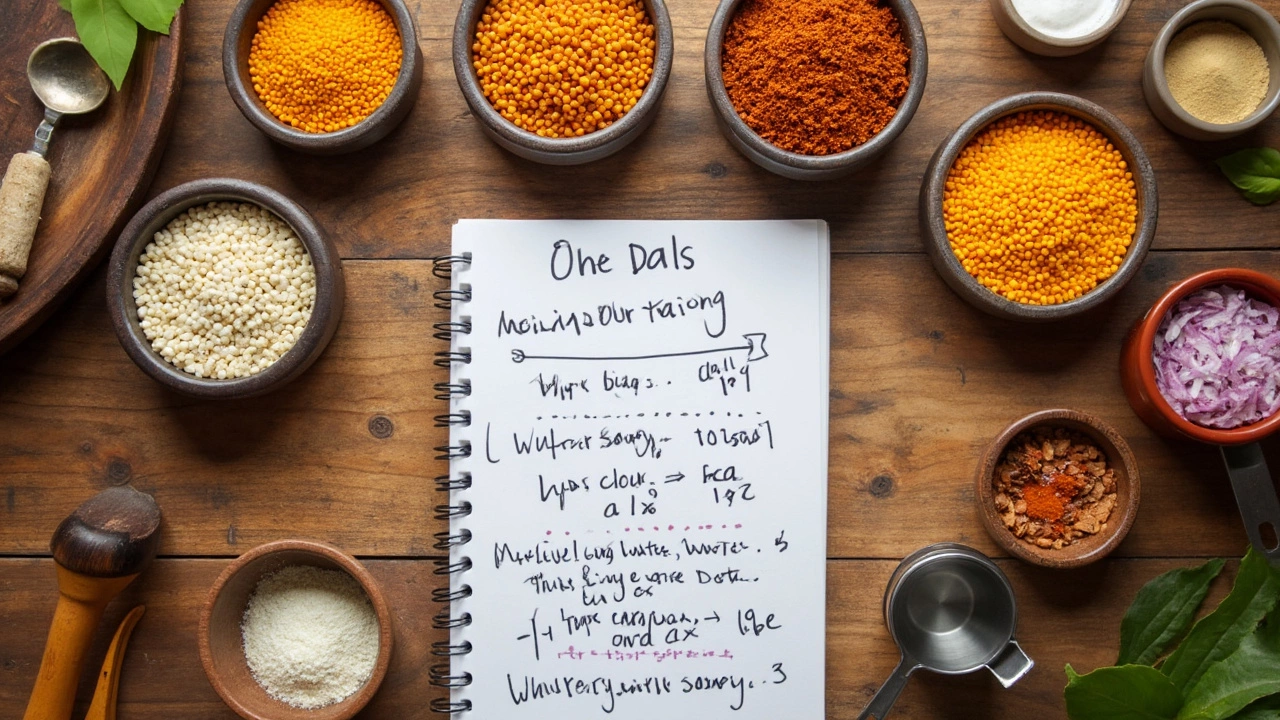
How Much Water for 1 Cup of Dal? Practical Tips for Perfect Texture
Wondering how much water you actually need for 1 cup of dal? Here's a no-nonsense guide with helpful tips for getting the perfect consistency, whether you like your dal thick or soupy. Learn how different types of dals soak up water, common mistakes people make, and real-life tricks I swear by. Cooking dal doesn't need to be confusing—let's take the guesswork out of it. Get ready for better, tastier dal every time.
View More