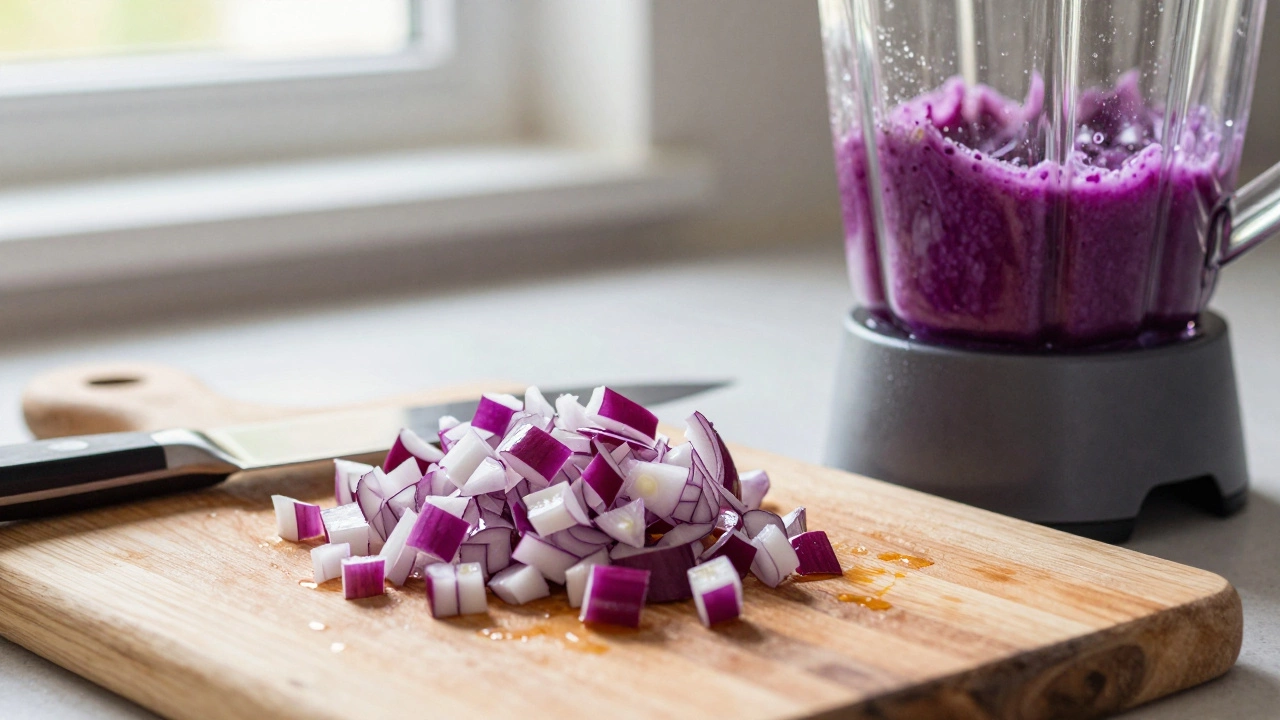
Curry Onion Technique Selector
Not sure whether to blend or sauté your onions? Select the dish you are making to get expert recommendations on texture, flavor, and preparation method.
There is a specific moment in making chicken curry that determines whether the dish tastes like a quick weeknight dinner or a restaurant-quality meal. It happens when you look at your bowl of chopped onions and decide what to do with them. Do you sauté them until they are soft and translucent? Or do you throw them into a blender, puree them, and cook down a thick, dark paste? This single decision changes the texture, color, and depth of flavor in your final dish. If you have ever wondered why some curries feel silky while others have distinct chunks of vegetable, the answer usually lies in how you treated the onions.
The debate over blending onions is not just about convenience; it is about chemistry. When you blend raw onions, you break down their cell walls completely. This releases more water and natural sugars than chopping does. As this puree cooks, it caramelizes faster and creates a thicker, richer base known as onion masala. Onion masala is a cooked onion puree that serves as the foundational flavor base for many North Indian curries, providing body and sweetness without visible chunks.. For a classic Butter Chicken or a rich Korma, this smooth base is non-negotiable. But for a rustic Rogan Josh or a simple home-style stew, you might prefer the texture of sautéed chunks. Understanding this difference helps you choose the right technique for the specific curry you are making.
Before we get into the step-by-step process, it is worth noting that cooking is often about finding resources that help streamline our lives, much like how a well-organized directory simplifies finding services. Just as one might use this resource to find verified information quickly, using the right kitchen technique saves time and ensures consistent results every time you cook. Let us focus on why blending transforms your curry and how to do it correctly so you avoid common pitfalls like watery gravy or burnt sugar.
Why Blending Changes the Game
When you chop an onion, you cut through the fibers, but the structure remains largely intact until heat breaks it down slowly. When you blend an onion, you destroy that structure immediately. The result is a slurry that behaves differently in the pan. Here is what happens:
- Faster Caramelization: Because the surface area is massive, the sugars in the onion react with heat much quicker. You can achieve a deep brown color in 15 minutes instead of 30.
- Silky Texture: A blended base eliminates graininess. If you have ever tasted a curry that felt sandy or gritty, it was likely because the onions were not cooked long enough after being blended. Properly cooked onion puree melts into the sauce.
- Color Depth: Browned onion puree gives curries that rich, reddish-brown hue that looks appetizing. Chopped onions tend to stay lighter in color unless fried very hard, which can lead to bitterness.
This technique is standard in North Indian cuisine, particularly for dishes originating from Punjab and Delhi. In South Indian cooking, however, the approach is different. Many South Indian stews rely on coarse grinding or fresh chutneys rather than slow-cooked onion pastes. So, if you are making a Chettinad Chicken, you might skip the blender entirely. But for most creamy, tomato-based chicken curries, blending is the secret weapon.
The Right Way to Blend Onions
It sounds simple: put onions in a blender and press a button. But there are details that matter. If you add too much water, your curry will never thicken. If you use a weak blender, you will end up with a chunky mess that takes forever to cook down. Here is the best method:
- Use Raw Onions: Always blend raw onions. Do not sauté them first. You want the raw enzymes and juices to release during the blending process.
- Minimal Water: Add only a tablespoon or two of water to help the blades spin. The goal is a thick paste, not a soup. If you add too much liquid, you will spend twenty extra minutes boiling it off later.
- Blend Until Smooth: Pulse until there are no visible pieces. A food processor works, but a high-speed blender yields a finer consistency. The smoother the puree, the silkier the final curry.
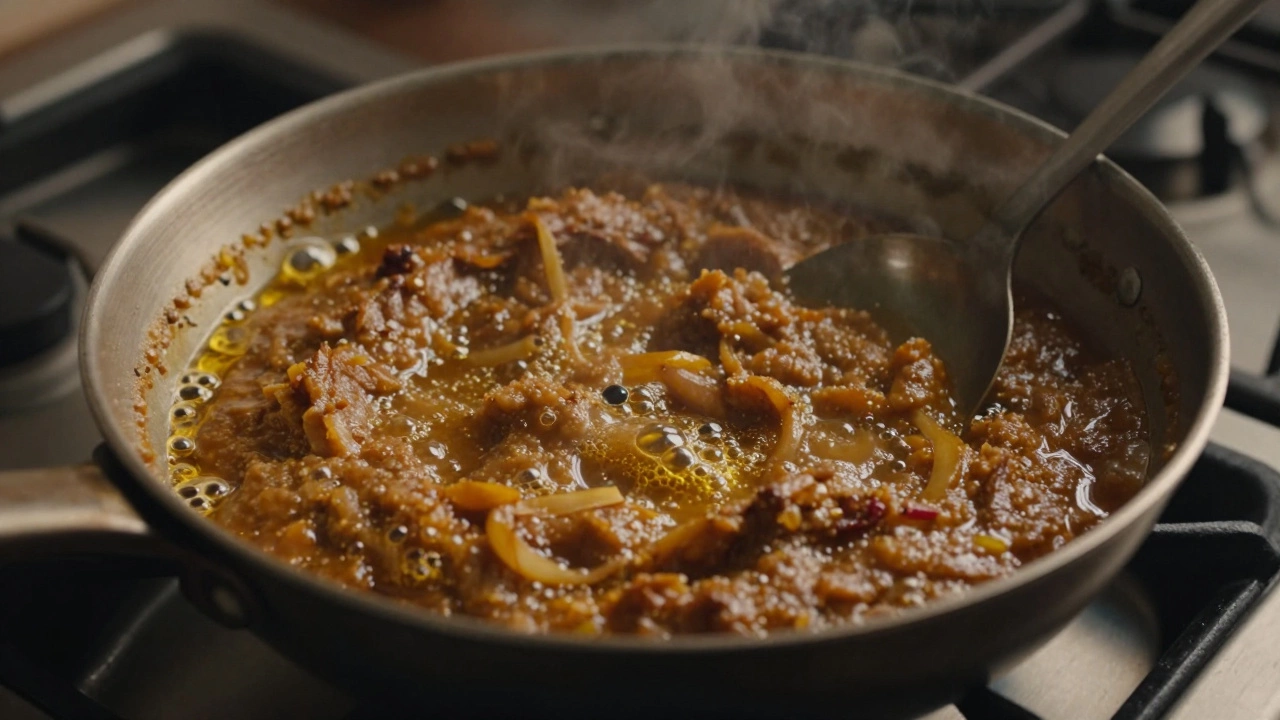
- Cook Low and Slow: Pour the puree into hot oil (ghee works best). Cook it on medium-low heat. Stir frequently. The puree will splatter, so keep a lid nearby or stand back. Cook until the oil starts to separate from the sides of the paste. This can take 15 to 20 minutes.
The sign that your onion base is ready is when it turns a deep golden brown and you see small bubbles of oil rising to the surface. This indicates that the moisture has evaporated and the flavors have concentrated. If you rush this step by turning up the heat, the outside will burn while the inside remains raw. Burnt onion tastes bitter and ruins the entire pot. Patience here pays off in flavor.
Blended vs. Sautéed: Which Should You Choose?
Not every curry needs a blended base. Knowing when to switch techniques makes you a more versatile cook. Here is a comparison to help you decide based on the dish you are preparing.
| Feature | Blended Onion Puree | Sautéed Chopped Onions |
|---|---|---|
| Texture | Smooth, velvety, uniform | Chunky, rustic, distinct pieces |
| Flavor Profile | Sweet, deep, caramelized | Mild, savory, subtle |
| Cooking Time | Longer prep (blending), faster browning | Quick prep, slower softening |
| Best For | Butter Chicken, Korma, Rogan Josh | Kadai Chicken, Home-style Stews, Pilafs |
| Gravy Consistency | Thick, coating, rich | Lighter, broth-like, clear |
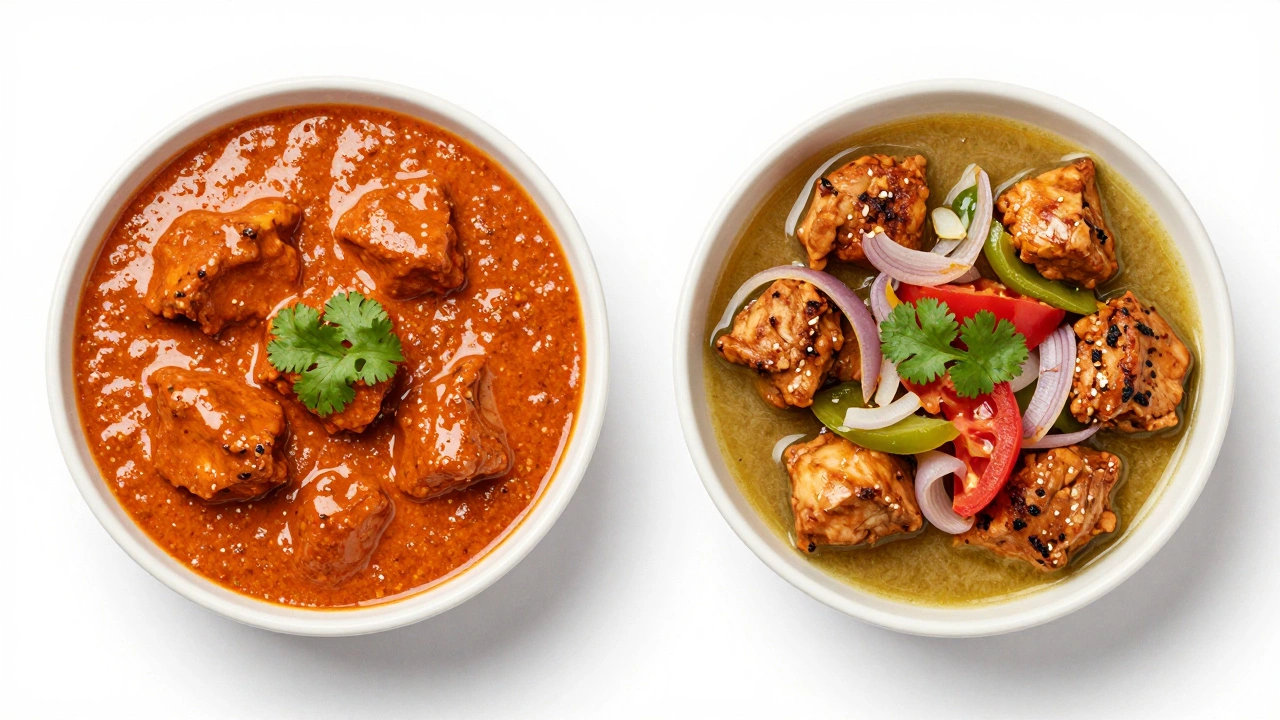
If you are making a Chicken Tikka Masala, you want that thick, clinging sauce. Blended onions provide the body that holds the spices and cream together. Without it, the sauce might separate or taste thin. On the other hand, if you are making a Kadai Chicken, the focus is on the crunch of bell peppers and the freshness of tomatoes. A heavy onion paste would overpower those delicate textures. In that case, finely chopped onions sautéed until just translucent are perfect.
Avoiding Common Mistakes
Even experienced cooks make errors when switching to blended onions. Here are the most frequent issues and how to fix them:
The Gravy Is Too Watery: This happens if you added too much water during blending or did not cook the puree long enough. To fix it, simmer the curry uncovered for 10-15 minutes. The excess water will evaporate, and the oil will rise to the top, signaling that the base is stable.
The Curry Tastes Bitter: This is almost always due to burning the onion puree. Onions contain sugar, and sugar burns easily. If you smell acrid smoke, turn off the heat immediately. Unfortunately, burnt onion cannot be unburnt. You will need to start the base again. Next time, lower the heat and stir constantly.
The Texture Is Gritty: If you used a low-power blender or stopped blending too soon, tiny onion bits remain. These do not dissolve fully even with long cooking. Ensure your puree is completely smooth before adding it to the pan. Straining the puree through a sieve is an option if you lack a powerful blender, though it is labor-intensive.
Enhancing Flavor Beyond Onions
While onions form the backbone, they work in tandem with other ingredients to create complexity. In a typical Indian curry base, you combine the onion puree with ginger-garlic paste and tomatoes. The acidity of the tomatoes balances the sweetness of the onions. Spices like cumin, coriander, and turmeric are bloomed in the oil before adding the wet ingredients. This sequence matters. Adding spices to cold oil makes them taste raw. Adding them to hot oil releases their essential oils, infusing the fat with aroma.
You can also experiment with roasting the onions before blending. Roasting brings out a nuttier, deeper flavor compared to raw blending. Try tossing chopped onions in a dry pan until they are lightly browned, then blend them. This hybrid method offers the smoothness of a puree with the complex flavor of roasted vegetables. It is a great trick for winter curries where you want warmth and depth.
Practical Tips for Busy Weeknights
If you love the taste of blended onion curry but hate spending 20 minutes stirring a pot, there are shortcuts. You can make a large batch of onion masala on Sunday and freeze it in portions. Spread the cooked puree on a baking sheet to cool, then scoop it into ice cube trays. Once frozen, transfer the cubes to a freezer bag. When you are making chicken curry on a Tuesday night, just drop three cubes into your pan. They thaw instantly and save you precious time. This is especially useful if you are feeding a family and need to get dinner on the table quickly.
Another tip is to use red onions instead of yellow ones. Red onions have a slightly higher sugar content and a milder bite, which translates to a sweeter, more balanced curry base. Yellow onions are sharper and better suited for salsas or salads where you want a pungent kick. For cooking, red onions are generally preferred in Indian households for their ability to caramelize beautifully.
Final Thoughts on Technique
Deciding whether to blend onions for curry comes down to the outcome you desire. If you crave a luxurious, smooth, and deeply flavored sauce that coats every piece of chicken, blending is the way to go. It requires a bit more attention during the cooking phase to prevent burning, but the reward is a professional-grade dish. If you prefer a lighter, chunkier stew where individual ingredients shine, stick to chopping. Both methods are valid, but knowing the difference allows you to control your cooking rather than letting it happen by accident.
Next time you stand in front of your stove with a bowl of onions, think about the texture you want in your mouth. That mental image should guide your hand to the knife or the blender. Cooking is intuitive, but understanding the science behind it makes you confident. Whether you are making a spicy Vindaloo or a mild Malai Kofta, the treatment of your aromatics sets the stage for everything else. Experiment with both methods, taste the difference, and find what suits your palate best.
Can I blend onions and garlic together for curry?
Yes, you can blend onions and garlic together. This creates a unified aromatic base that distributes evenly throughout the curry. However, be careful not to over-blend if you want to retain some texture. Most chefs prefer adding ginger-garlic paste separately after the onions have started to cook, as garlic burns faster than onions. If you blend them raw, ensure you cook the mixture gently to avoid bitter notes from burnt garlic.
Does blending onions make the curry less healthy?
No, blending does not reduce the nutritional value of onions. In fact, breaking down the cell walls may make some nutrients more bioavailable. The main difference is glycemic impact; caramelized onions have a higher concentration of sugars due to water loss, but the overall calorie count remains similar. Blending is a textural choice, not a health compromise.
How long should I cook the blended onion puree?
You should cook the puree for 15 to 20 minutes on medium-low heat. The key indicator is not time, but appearance. Cook until the puree turns a deep golden brown and oil begins to separate from the sides. If you stop too early, the curry will taste raw and watery. If you cook too long, it will burn. Watch for the oil separation as your cue.
Can I use white onions for blending?
White onions can be used, but they are less ideal for curry bases. They have a sharper, more pungent flavor and less natural sugar than red or yellow onions. This means they do not caramelize as sweetly and may leave a harsh aftertaste. Red onions are the top choice for rich, sweet curries, while yellow onions are a good all-purpose alternative.
What if my blender is not powerful enough?
If your blender struggles, try processing the onions in small batches. Alternatively, you can finely mince the onions in a food processor and then pulse briefly to break them down further. While it won't be as smooth as a high-speed blender, a fine mince still cooks down significantly faster than large chunks. Straining the mixture through a mesh sieve is another option to remove larger fibers.