Street Egg Safety Checker
Planning to eat an omelette or boiled egg at a stall? Use this checker to evaluate the risk factors before you buy.
Awaiting Input...
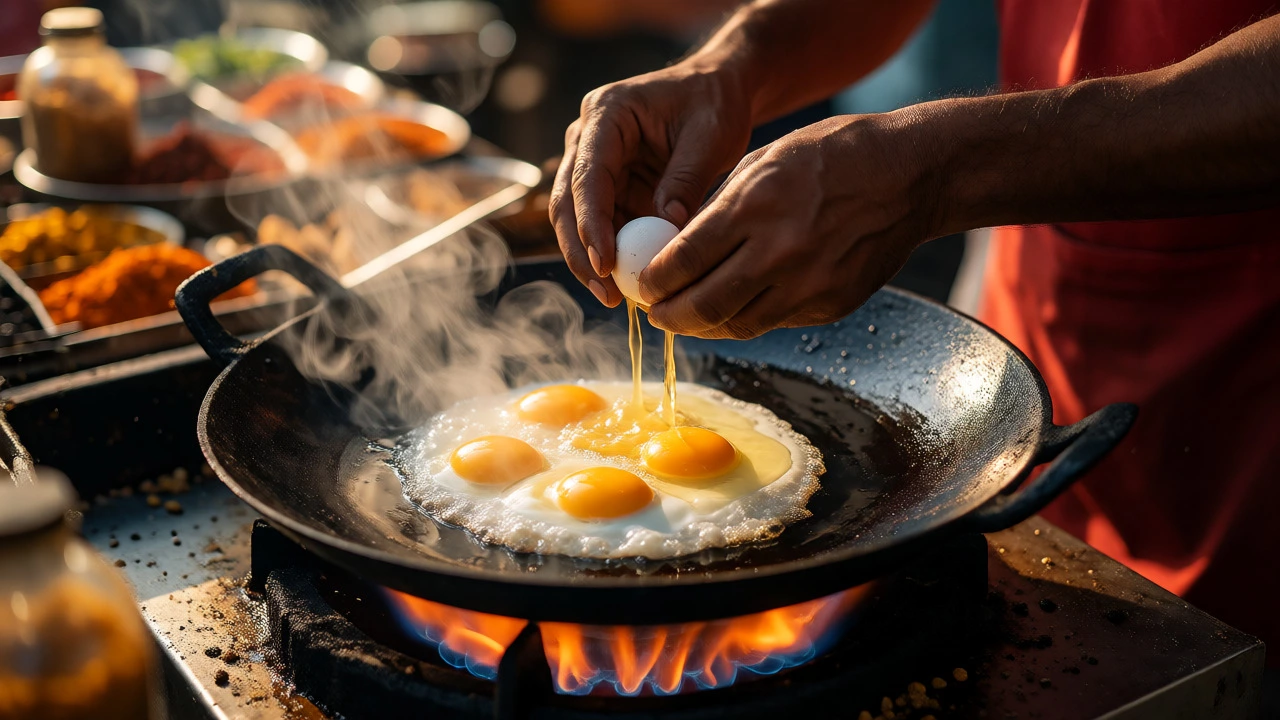
You’re standing at a busy stall in Mumbai or Delhi, watching the vendor crack an egg into a sizzling pan. The smell is irresistible. But then that nagging thought hits you: is it safe to eat cooked eggs in India? You’ve heard horror stories about food poisoning, salmonella, and those mysterious stomach bugs that strike after eating out. It’s a valid concern, especially when navigating the vibrant but chaotic world of Indian street food.
The short answer is yes, it is generally safe-but only if you know what to look for. Safety isn’t just about the heat; it’s about the entire journey of that egg from the farm to your plate. Let’s break down exactly how to keep your tummy happy while enjoying your favorite omelette or boiled egg snack.
Key Takeaways
- Heat kills bacteria: Properly cooked eggs (yolk and white solid) are safe even in hot climates.
- The Danger Zone matters: Keep cooked eggs out of the 5°C-60°C range for no more than 2 hours.
- Hygiene over hype: Vendor cleanliness and handwashing matter more than the egg source alone.
- Reheating rules: Never reheat eggs multiple times; eat them fresh whenever possible.
Why Eggs Are High-Risk Foods
Eggs are nutritious powerhouses, packed with protein and choline. But they are also a favorite playground for bacteria like Salmonella and Escherichia coli. In tropical countries like India, where ambient temperatures often hover above 30°C (86°F), bacteria multiply rapidly. This is why raw or undercooked eggs carry a higher risk here than in cooler climates.
When we talk about "safety," we aren't just talking about whether the egg was rotten before cooking. We are talking about cross-contamination and time-temperature abuse. If a vendor uses the same cloth to wipe a dirty table and then handles your boiled egg, bacteria transfer instantly. Understanding this chain of events helps you make smarter choices at the next street corner.
The Science of Cooking: Temperature and Time
Cooking is your first line of defense. According to global food safety standards, including those adapted by the FSSAI (Food Safety and Standards Authority of India), eggs must reach an internal temperature of at least 71°C (160°F) to kill harmful pathogens.
In practical terms, this means:
- Hard-boiled eggs: Boil for at least 9-12 minutes. The yolk should be fully set, not runny.
- Omelettes and Bhurji: Ensure there is no translucent, slimy part left in the center. The texture should be firm throughout.
- Sunny-side up: Riskier. The white must be completely opaque, and ideally, the yolk should be covered or flipped to ensure heat penetration.
If you see a vendor serving half-cooked eggs in the middle of a humid July afternoon, proceed with caution. The residual heat might not be enough to eliminate all bacteria if the egg sat on the counter for a bit before cooking.

The Two-Hour Rule in Indian Climates
This is the most critical rule for anyone eating cooked eggs outside the home. Bacteria grow fastest between 5°C and 60°C (41°F-140°F). This range is known as the "Danger Zone." In air-conditioned homes, you have some leeway. On a hot street in Chennai or Kolkata, you don’t.
If a vendor boils a batch of eggs at 8 AM and serves them at 1 PM without refrigeration, those eggs are sitting in the Danger Zone for five hours. That’s plenty of time for bacterial colonies to explode. Always ask yourself: How long has this been sitting out? If the eggs are kept in insulated containers or served immediately after boiling, they are safer. If they are piled in a basket exposed to direct sunlight, skip them.
| Preparation Type | Safety Level | Key Risk Factor | Best Practice |
|---|---|---|---|
| Hard-Boiled | High | Shell cracks allowing entry of bacteria | Peel only when ready to eat; keep cool |
| Soft-Boiled | Moderate | Runny yolk may harbor Salmonella | Avoid if immune-compromised or pregnant |
| Omelette/Bhurji | High | Undercooked centers; oil quality | Ensure full coagulation; watch oil smoke point |
| Raw/Lassi Mix | Low | No heat treatment applied | Only consume if eggs are pasteurized |
Vendor Hygiene: What to Watch For
In India, street food culture is alive and well, but hygiene standards vary wildly. You can spot a safe egg vendor by looking at three specific things:
- Hand Washing: Does the vendor wash hands with soap after handling money and before cracking eggs? Money is filthy. If they touch cash and then your egg without washing, contamination is guaranteed.
- Water Quality: Do they use clean water to wash eggs or rinse utensils? Cloudy or reused water is a red flag.
- Utensil Cleanliness: Look at the frying pans and spatulas. Are they blackened with layers of old carbon, or reasonably clean? While some char is normal, excessive grime suggests poor cleaning practices.
Also, observe the egg shells. Are they cracked? Cracked shells allow bacteria to enter the egg even before cooking. Vendors who pick up broken eggs from the bottom of the basket to save money are taking shortcuts that affect your health.
Home Storage vs. Street Food Risks
At home, you control the environment. Refrigerated eggs last 3-5 weeks. Once cooked, store them in the fridge within two hours. They stay good for up to one week in the shell, or 3-4 days if peeled.
Street food lacks this luxury. There is no fridge behind the cart. This is why freshness is your best friend. Buy eggs that are still warm from the pot. Avoid trays of cold, hard-boiled eggs that have been sitting there since morning unless you are certain they were kept in ice boxes.
Another common mistake is reheating. Many vendors reheat leftover bhurji or omelettes in the morning. Repeated heating breaks down proteins and creates ideal conditions for toxin production. Try to order freshly made dishes rather than pre-made ones that are simply warmed up.

Special Considerations for Vulnerable Groups
If you are pregnant, elderly, or have a weakened immune system, the stakes are higher. Pregnancy increases susceptibility to Listeria and Salmonella. The consequences can be severe. For these groups, stick strictly to fully cooked, freshly prepared eggs. Avoid soft-boiled options entirely when eating out.
Travelers visiting India from colder countries often have gut flora that isn't accustomed to local bacterial loads. Ease into street food. Start with well-cooked items like poha or idli before jumping into heavy egg curries. Listen to your body. If a particular stall gives you trouble, mark it off your list.
Troubleshooting Common Egg Issues
What if you ate an egg and feel uneasy later? Mild bloating or gas is common due to sulfur compounds, especially if you aren't used to high-protein breakfasts. However, symptoms of food poisoning include nausea, vomiting, diarrhea, and fever appearing 6 hours to 3 days after consumption.
If you suspect bad eggs, hydrate with ORS (Oral Rehydration Solution). Seek medical attention if symptoms persist beyond 24 hours or if you notice blood in stool. Don't ignore persistent pain; it could indicate something other than simple indigestion.
Final Verdict: Enjoy with Awareness
So, is it safe? Yes. Millions of Indians eat eggs daily without issue. The key is vigilance. Choose vendors who prioritize cleanliness, ensure eggs are thoroughly cooked, and avoid items that have been sitting in the heat for too long. With these simple checks, you can enjoy your masala omelette or dahi anda without worry.
Can I eat soft-boiled eggs safely in India?
It depends on your health status and the source. Soft-boiled eggs have runny yolks which may not reach temperatures high enough to kill Salmonella. For healthy adults eating from hygienic sources, the risk is low but present. Pregnant women and immunocompromised individuals should avoid them.
How do I tell if a boiled egg is bad?
Smell is the best indicator. A bad egg smells sulfurous and unpleasant when peeled. Visually, if the white is pinkish, iridescent, or slimy, discard it. Also, if the egg floats in water before boiling, it is old, though not necessarily unsafe if cooked thoroughly.
Is it safe to eat eggs from street vendors during monsoon season?
Monsoon increases humidity and bacterial growth. Stick to freshly cooked, hot items. Avoid raw salads or uncooked garnishes alongside eggs. Ensure the vendor keeps their stock covered and away from puddles or dust.
Do organic eggs reduce the risk of infection?
Organic eggs come from hens raised in better conditions, which may reduce initial bacterial load. However, once laid, all eggs are susceptible to external contamination during transport and handling. Proper cooking remains the most effective safety measure regardless of egg type.
How long can cooked eggs stay at room temperature in India?
In hot and humid Indian weather, limit exposure to 1 hour. In cooler months or AC environments, you can stretch this to 2 hours. Beyond this window, bacterial multiplication becomes significant, increasing the risk of foodborne illness.