Chutney Texture Matcher
Select a dish to see the perfect chutney match.
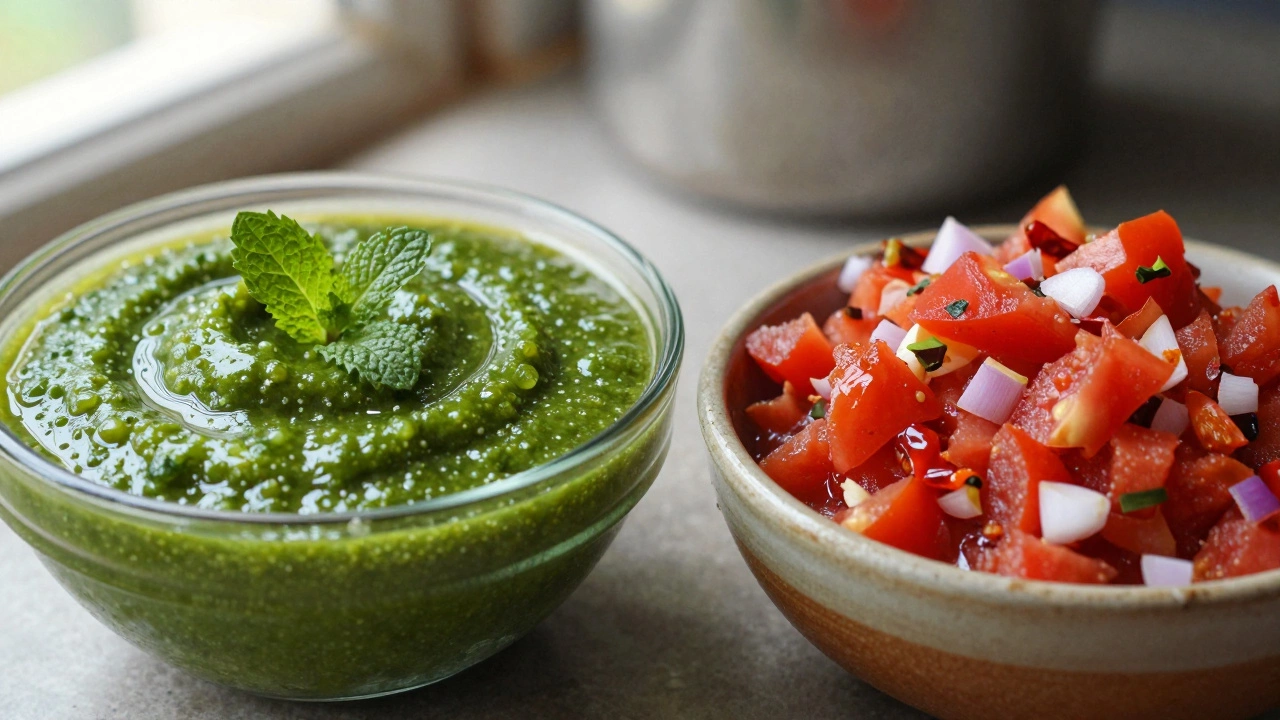
Walk into any Indian kitchen, and you’ll find a jar of green chutney and a bowl of red tomato relish sitting side by side. One is silky enough to spread on toast; the other has visible bits of onion and chili that crunch between your teeth. So, is chutney smooth or chunky? The honest answer is: it depends entirely on what you are eating it with.
This isn't just a matter of personal preference. It’s about function. In Indian cooking, texture dictates purpose. A smooth chutney acts like a sauce or a dip, while a chunky one behaves more like a condiment or a garnish. If you’ve ever wondered why your store-bought mint chutney tastes different from the one your grandmother made, or why your samosa dipping sauce turned into mush, the secret lies in how you process the ingredients.
The Two Faces of Chutney
To understand the texture debate, we need to look at the two main categories of chutney found in South Asian cuisine. Think of them as having different jobs to do.
Smooth Chutneys (The Dippers)
These are the liquid golds of the snack world. They are pureed until they have no graininess. You see these most often with:
- Mint-Coriander Chutney: A vibrant green blend used for dipping pakoras, dosas, and idlis.
- Tamarind Date Chutney: A sweet and sour black sauce served with chaat and street food.
- Coconut Chutney: A creamy white dip essential for South Indian meals like dosa and uttapam.
Why smooth? Because when you are dipping a crispy fried snack like a samosa or a vada, you want the flavor to coat the outside without falling off. A thick, smooth consistency clings to the food. If it’s too chunky, the pieces fall into the plate, and if it’s too thin, it runs away. The goal here is emulsion and suspension.
Chunky Chutneys (The Garnishes)
On the other hand, chunky chutneys are all about texture contrast. These are often called "relishes" in Western terms. You typically find these on top of dishes rather than in a dipping bowl.
- Tomato-Onion Chutney: Finely chopped tomatoes, onions, and chilies served alongside dal and rice.
- Pomegranate Relish: Crunchy seeds mixed with herbs for a fresh pop on salads or curries.
- Mango Pickle-style Chutney: Coarsely ground raw mango with spices, meant to be eaten sparingly with plain rice.
Why chunky? Because these chutneys provide a burst of freshness and crunch against soft foods like steamed rice, hot dal, or fluffy naan. If you pureed a tomato-onion chutney completely, it would lose its identity and become a watery soup. The chunks ensure every bite has a distinct texture.
How to Control the Texture: Tools and Techniques
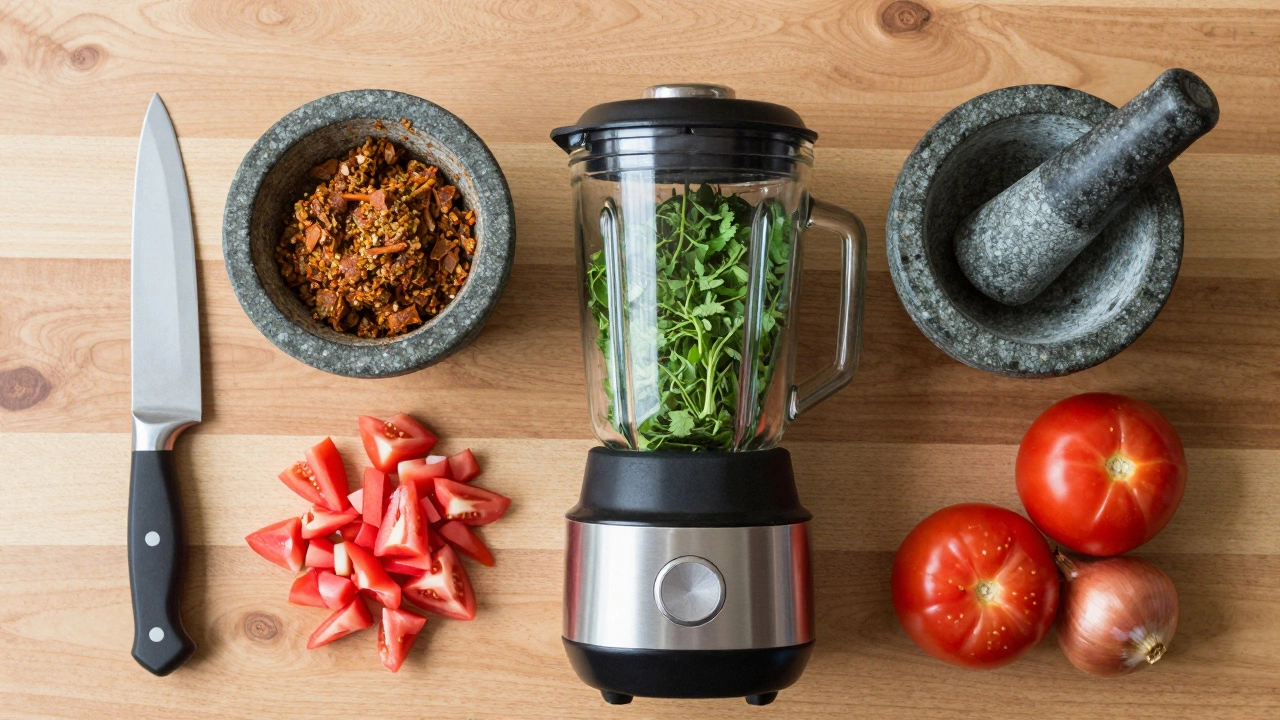
You don’t need fancy equipment to get the right consistency. However, knowing which tool to use makes a huge difference. Here is how to achieve the perfect texture based on your goal.
| Tool | Best For | Resulting Texture |
|---|---|---|
| Blender | Green chutneys, tamarind dates, coconut | Silky smooth, aerated, sometimes frothy |
| Food Processor | Coconut, nut-based chutneys | Thicker, slightly grainy, less air incorporated |
| Mortar and Pestle | Small batches, spice pastes | Rustic, uneven, releases maximum oil/flavor |
| Chef's Knife | Tomato, onion, cucumber relishes | Uniform chunks, retains structural integrity |
If you want a smooth chutney, your blender is your best friend. But there’s a trick: add water gradually. Start with half the amount of water you think you need. Blend for 10 seconds, check, then add more. Over-blending can heat up the mixture, turning bright green coriander into a dull brown sludge due to oxidation. Pulse rather than run continuously if you’re worried about heat.
For a chunky chutney, forget the machine. Use a sharp knife. Dice your onions and tomatoes uniformly-about the size of a pea or a small grape. This ensures that every spoonful has the same balance of flavors. If you try to make a chunky chutney in a blender using the pulse button, you’ll likely end up with some parts pureed and others untouched, which is messy and inconsistent.
The Role of Ingredients in Consistency
It’s not just about how you chop or blend; it’s about what you put in the bowl. Certain ingredients naturally dictate the final texture.
Water Content is Key
Cucumber, tomato, and mint have high water content. When blended, they release juice quickly, creating a thinner base. If you want a thicker smooth chutney using these ingredients, you might need to strain out excess water or add a thickening agent like roasted chickpea flour (besan) or even a tablespoon of yogurt.
Fiber and Fat
Coconut and nuts (like cashews or peanuts) are low in water but high in fat and fiber. They create a dense, creamy paste even with minimal liquid. This is why coconut chutney stays thick and doesn’t separate easily. To make it smoother, soak the grated coconut in warm water before blending. The heat helps break down the fibers.
Acidity Changes Structure
Lemon juice or tamarind adds acidity, which can help preserve color but also affects texture. High acidity can sometimes cause dairy-based chutneys (like those with yogurt) to curdle or separate if added too early. Always add lemon juice at the very end of blending to maintain a stable emulsion.
Common Mistakes That Ruin Chutney Texture
I’ve seen many home cooks struggle with chutney consistency. Here are the three most common pitfalls and how to fix them.
1. The Watery Green Sludge
This happens when you use fresh, wet coriander and mint leaves without draining them properly. After washing your herbs, let them air-dry for at least 30 minutes or spin them in a salad spinner. Excess water dilutes the flavor and thins the texture. If your chutney is already too watery, blend in a handful of roasted gram flour or crushed peanuts to absorb the moisture.
2. The Grainy Coconut Paste
If your coconut chutney feels sandy, your blender blades aren’t powerful enough, or you didn’t use enough liquid. Coconut fibers are tough. To fix this, blend the coconut with a little warm water first into a fine paste, then add the other ingredients. Alternatively, grate the coconut finely by hand before processing.
3. The Separated Tamarind Sauce
Tamarind date chutney often separates after sitting for a few hours, with oil rising to the top. This is normal because it contains fats from frying onions or spices. Simply stir it well before serving. To prevent excessive separation, ensure the tamarind pulp is strained thoroughly to remove fibrous bits, and cook the chutney longer to reduce excess moisture.
Matching Texture to Food: A Quick Guide
Still unsure which texture to aim for? Let the main dish decide. Here is a simple rule of thumb:
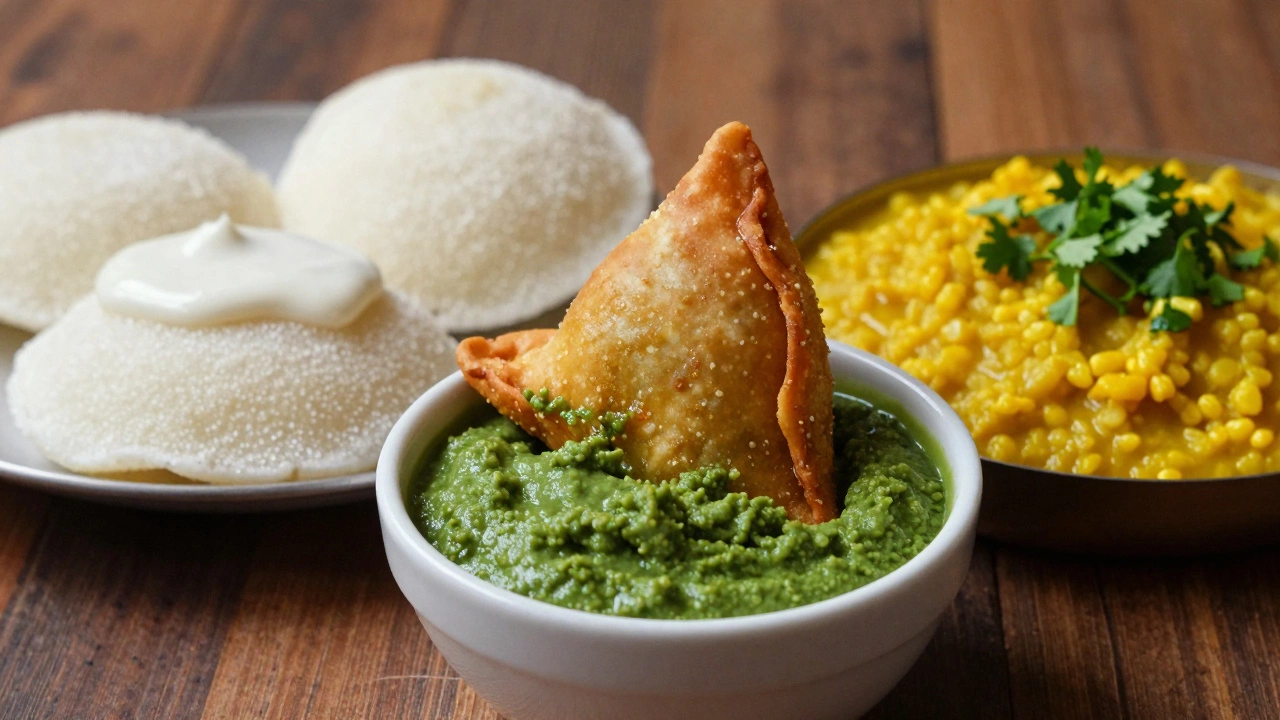
- Fried Snacks (Samosas, Pakoras, Vadas): Go smooth. The crisp exterior needs a coating, not a topping. A thick, smooth mint-chutney provides a cooling contrast to the hot, oily snack.
- Steamed Foods (Idli, Dosa, Steamed Rice): Go smooth but pourable. Idlis are spongy and absorb flavor. A smooth coconut chutney seeps into the pores, enhancing the taste. A chunky chutney would just sit on top and slide off.
- Flatbreads (Naan, Roti, Paratha): Go chunky or semi-smooth. When spreading chutney on bread, a bit of texture adds interest. A finely chopped tomato-onion mix spreads well and offers bursts of flavor with each bite.
- Curries and Dal: Go chunky. A dollop of fresh, chunky coriander-cilantro chutney on top of yellow dal adds color and a fresh crunch that contrasts with the soft lentils.
Storage Tips for Maintaining Texture
Texture changes over time. A smooth chutney might separate, and a chunky one might wilt. Here’s how to keep yours fresh.
Smooth Chutneys:
Store in an airtight glass jar in the refrigerator. Add a teaspoon of oil on top to create a seal that prevents oxidation. This keeps green chutneys vibrant for up to 5 days. If it separates, just give it a good shake or stir.
Chunky Chutneys:
These don’t last as long because the cut vegetables release water. Make them fresh daily if possible. If you must store them, keep them in a shallow container to allow airflow, and consume within 24 hours. Avoid adding salt too early, as it draws out moisture and makes the chutney soggy faster.
In the end, whether your chutney is smooth or chunky is less about rules and more about rhythm. It’s about matching the mouthfeel of the condiment to the main dish. Next time you stand in front of your blender, ask yourself: am I dipping, or am I garnishing? Your answer will tell you exactly how to process your ingredients.
Can I make a smooth chutney with a mortar and pestle?
Yes, but it requires patience. A mortar and pestle will never achieve the silky, aerated texture of a high-speed blender. Instead, you’ll get a rustic, coarse paste that is rich in flavor because the grinding action releases essential oils from the herbs and spices. This is ideal for small batches or traditional recipes where texture is secondary to intensity.
Why does my green chutney turn brown?
Oxidation is the culprit. When chlorophyll-rich herbs like coriander and mint are exposed to air and heat, they break down and turn brown. To prevent this, blend quickly, add lemon juice immediately, and store the chutney in an airtight container with a layer of oil on top to minimize air contact.
How do I thicken a watery chutney?
If your chutney is too thin, you can add thickening agents. For green chutneys, blend in a tablespoon of roasted chickpea flour (besan) or crushed peanuts. For tomato-based chutneys, simmer it on low heat to evaporate excess water, or add a pinch of cornstarch slurry. Never add ice cubes as a primary thickener, as it dilutes the flavor.
Should I peel the garlic and ginger before blending?
For smooth chutneys, yes. The skins of garlic and ginger can leave gritty bits in the final product. Peeling them ensures a silky finish. For chunky chutneys, it’s optional, but peeling still recommended for better mouthfeel unless you specifically want the extra fiber and earthy notes from the skin.
Can I freeze chutney?
Smooth chutneys freeze reasonably well, especially those with high fat content like coconut or nut-based ones. However, herb-heavy chutneys may lose their vibrant color and fresh aroma upon thawing. Freeze in ice cube trays for easy portion control. Chunky chutneys do not freeze well as the vegetables become mushy and watery when thawed.