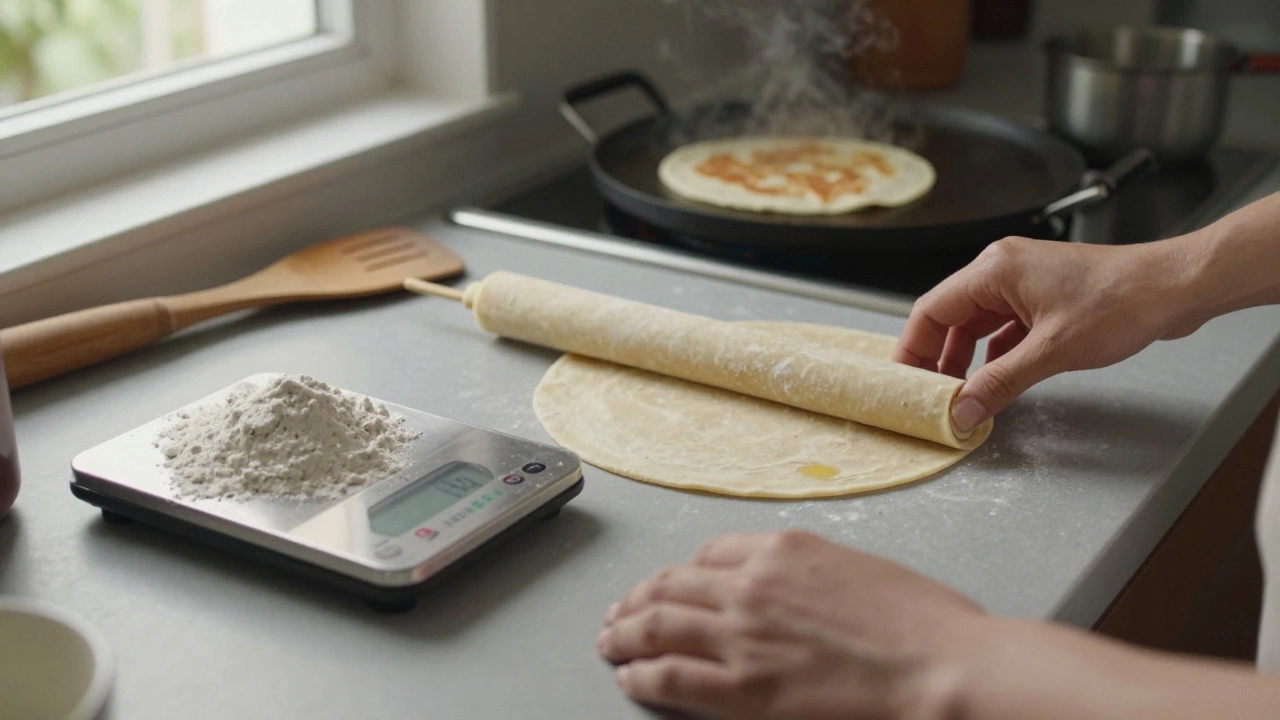
Roti Flour Calculator
Calculate the perfect flour amount for your roti size. For best results, use a kitchen scale for accuracy.
45 grams
For 6-inch roti (standard)
Pro Tip
Always measure flour lightly without packing. Use a dry brush to remove excess flour when rolling to prevent tough rotis.
Ever made a roti that turned out too thick, too hard, or fell apart when you tried to flip it? It’s not your hands-it’s the flour. The amount of flour you use for one roti isn’t just a suggestion; it’s the foundation of everything. Get it right, and your rotis will be soft, pliable, and perfect for scooping up curry. Get it wrong, and you’ll be scraping burnt dough off the tawa for the third time this week.
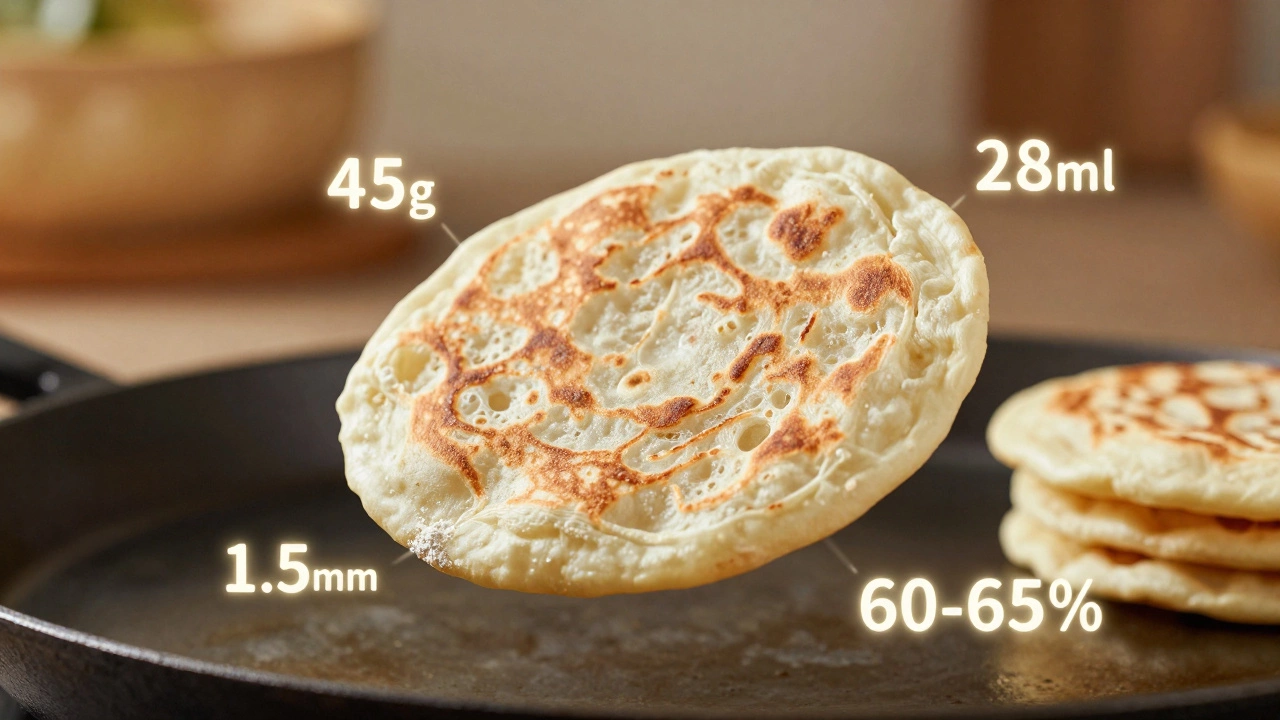
For one standard roti-about 6 inches wide-you need 45 grams of atta (whole wheat flour). That’s roughly 1/3 cup if you’re using a standard measuring cup. This isn’t a guess. It’s the ratio used in homes across Punjab, Uttar Pradesh, and Gujarat, and it’s backed by decades of practice, not just theory. You don’t need fancy tools. Just a kitchen scale, or a measuring cup you trust.
Why 45 Grams? The Science Behind the Number
Flour isn’t just flour. Atta has more fiber, more bran, and more moisture-absorbing capacity than all-purpose flour. That means it needs the right balance of water to activate gluten without making the dough stiff. Too little flour, and your roti turns into a sticky mess. Too much, and it becomes tough, like cardboard.
At 45 grams, the dough absorbs about 28-30 grams of water (that’s 60-65% hydration). That’s the sweet spot. It lets the dough rest, relax, and develop just enough elasticity to stretch without tearing. If you use 50 grams, you’ll need more water, but even then, the dough becomes harder to roll thin. If you use 40 grams, the roti might be too thin and tear easily, especially if you’re not an expert.
Think of it like this: 45 grams of flour gives you a roti that’s about 1.5 mm thick when rolled out. That’s thin enough to cook through in under a minute, but thick enough to hold its shape and not crack when folded.
How to Measure Flour Without a Scale
Not everyone owns a kitchen scale. That’s fine. You can still get it right.
- Use a standard 1/3 cup measuring cup. Scoop the flour lightly-don’t pack it down. Level it off with the back of a knife.
- If you’re using a spoon to scoop, fill it about 3 heaping tablespoons. That’s close enough for everyday use.
- Don’t pour flour straight from the bag. It compacts as it falls, and you’ll end up with way too much.
One trick I learned from my aunt in Lucknow: fill a small yogurt cup (the kind you get with Indian meals) to the brim with flour. That’s roughly 45 grams. Keep that cup next to your flour bin. Use it every time. No guessing.
Water, Salt, and Oil: The Other Players
Flour isn’t the only thing that matters. The other ingredients need to match the flour amount.
- Water: For 45 grams of flour, use 28-30 ml of warm water (not hot). Warm water helps the flour hydrate evenly. Cold water makes the dough stiff. Boiling water? That’s for parathas, not rotis.
- Salt: A pinch-about 0.5 grams. That’s less than 1/8 teaspoon. It enhances flavor, but too much makes the dough tough.
- Oil or ghee: Optional. Add 1/2 teaspoon if you want softer rotis that stay fresh longer. Skip it if you prefer traditional, plain rotis.
Mix the dry ingredients first. Then slowly add water. Don’t dump it all in at once. Stop when the dough starts coming together. It should feel like your earlobe-soft but not sticky.
Common Mistakes (and How to Fix Them)
Here’s what most people get wrong:
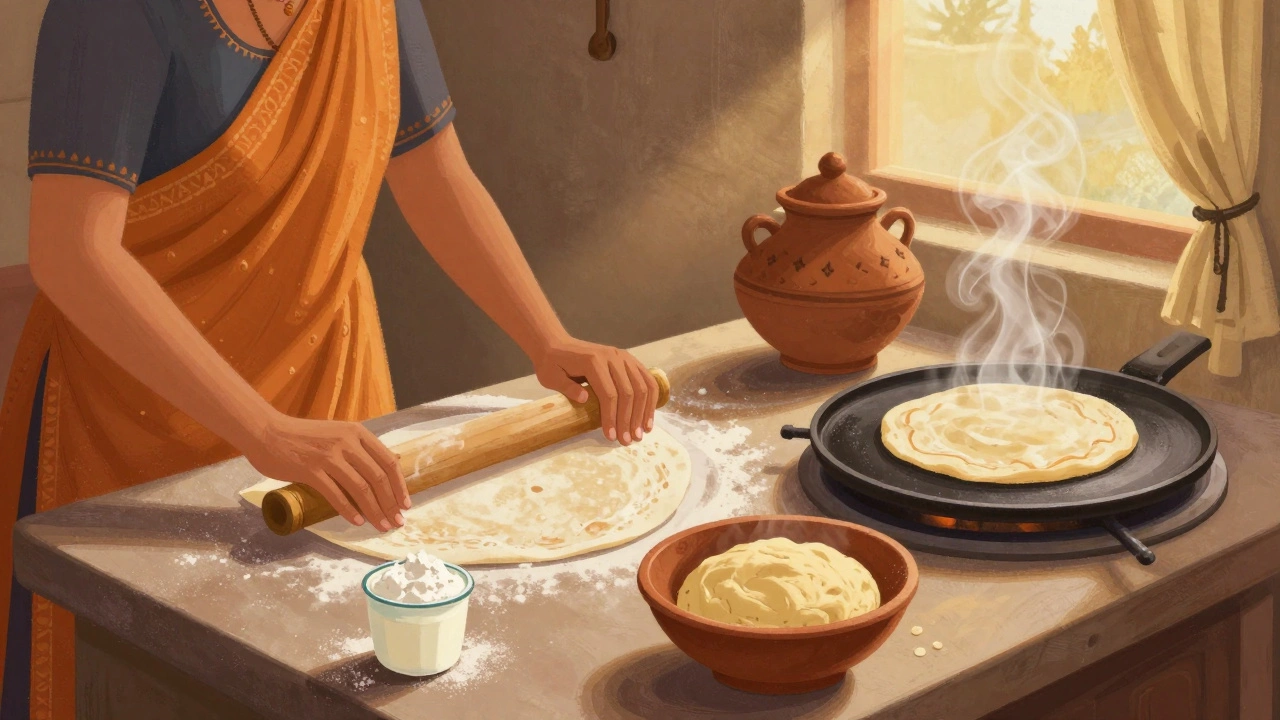
- Using too much flour when rolling: Dusting the rolling surface with extra flour? That’s the #1 reason rotis turn hard. Use a dry brush to sweep off excess. Or better yet, roll between two sheets of parchment paper.
- Skipping the rest time: Let the dough rest for at least 20 minutes. Gluten needs time to relax. If you roll it right after mixing, it’ll snap back like a rubber band.
- Rolling too thick: If your roti is thicker than 2 mm, it won’t puff up properly. Aim for thin, even circles. A roti that doesn’t puff? It’s either under-rolled or the dough is too dry.
- Overcooking: Cook each side for 30-40 seconds. You want light brown spots, not char marks. Press gently with a spatula to help it puff.
What If You Want Bigger or Smaller Rotis?
Not everyone likes the same size. Here’s how to adjust:
| Roti Size | Diameter | Flour Needed |
|---|---|---|
| Small (kids or snacks) | 4 inches | 35 grams |
| Standard (adult serving) | 6 inches | 45 grams |
| Large (family-style) | 8 inches | 60 grams |
For larger rotis, increase the water proportionally. A 60-gram dough ball needs about 40 ml of water. Always test one first. Roll it thin, cook it, and see how it puffs. Adjust the next batch if needed.
Storage and Leftovers
Leftover dough? Wrap it in a damp cloth and keep it in the fridge for up to 12 hours. If you’ve made too many rotis, stack them with a paper towel between each one, then store in an airtight container. Reheat on a dry tawa for 15 seconds per side. No microwave. It makes them rubbery.
Pro tip: If your rotis get dry by evening, sprinkle a few drops of water on them before reheating. The steam brings back the softness.
Final Tip: Trust Your Hands, Not Just the Scale
Numbers help. But experience matters more. If your dough feels too dry, add a teaspoon of water. Too sticky? Add a pinch of flour. Roti-making isn’t chemistry-it’s rhythm. You’ll learn it by feel.
Start with 45 grams. Make five rotis. Pay attention to how the dough behaves. Next time, you’ll know without counting. That’s when you know you’ve mastered it.
Can I use all-purpose flour instead of atta for roti?
No. All-purpose flour lacks the fiber and protein structure that atta has. Rotis made with AP flour will be flat, dense, and won’t puff. They’ll also tear easily. Stick to whole wheat atta-it’s what gives roti its texture and flavor.
Why won’t my roti puff up?
Three reasons: the dough is too dry, it’s not rolled thin enough, or the tawa isn’t hot enough. Make sure your dough has enough water (60-65% hydration), roll it to about 1.5 mm thickness, and heat the tawa until a drop of water sizzles and vanishes instantly.
How many rotis does one cup of flour make?
One cup of atta is about 120 grams. That makes roughly 2-2.5 rotis using the standard 45-gram ratio. So, one cup gives you 2 full-sized rotis and a half, or 3 smaller ones. Always measure by weight for accuracy.
Should I let the dough rest before rolling?
Yes. Resting the dough for 20-30 minutes lets the gluten relax. That makes rolling easier and prevents the dough from springing back. Cover it with a damp cloth to stop it from drying out.
Can I make roti dough ahead of time?
Yes. Make the dough up to 12 hours ahead and store it in the fridge in an airtight container or wrapped in a damp cloth. Let it sit at room temperature for 15 minutes before rolling. It’ll work just as well.