Urad Dal Soaking Time Calculator
Calculate Your Perfect Soak Time
Get the ideal soaking duration for fluffy dosa batter based on your kitchen conditions.
Recommended soaking duration
Getting the right soak time for urad dal is the difference between fluffy, crisp dosas and dense, gummy ones. If you’ve ever made dosa batter that didn’t ferment right, or ended up with batter that was too thick or too thin, the problem likely started with how long you soaked the urad dal. It’s not just a step you skip to save time-it’s the foundation of the whole recipe.
Why Soaking Urad Dal Matters
Urad dal (black gram) is the secret behind the airy texture of dosa. When soaked properly, the dal absorbs water, softens, and begins breaking down its starches and proteins. This sets the stage for fermentation, where natural yeasts and bacteria turn sugars into gas-those tiny bubbles that make your dosa light and bubbly.
Under-soaked urad dal won’t grind smoothly. You’ll end up with gritty batter that doesn’t ferment well. Over-soaked dal? It turns slimy, smells off, and can make your batter sour too fast. There’s a sweet spot.
Recommended Soak Time: 6 to 8 Hours
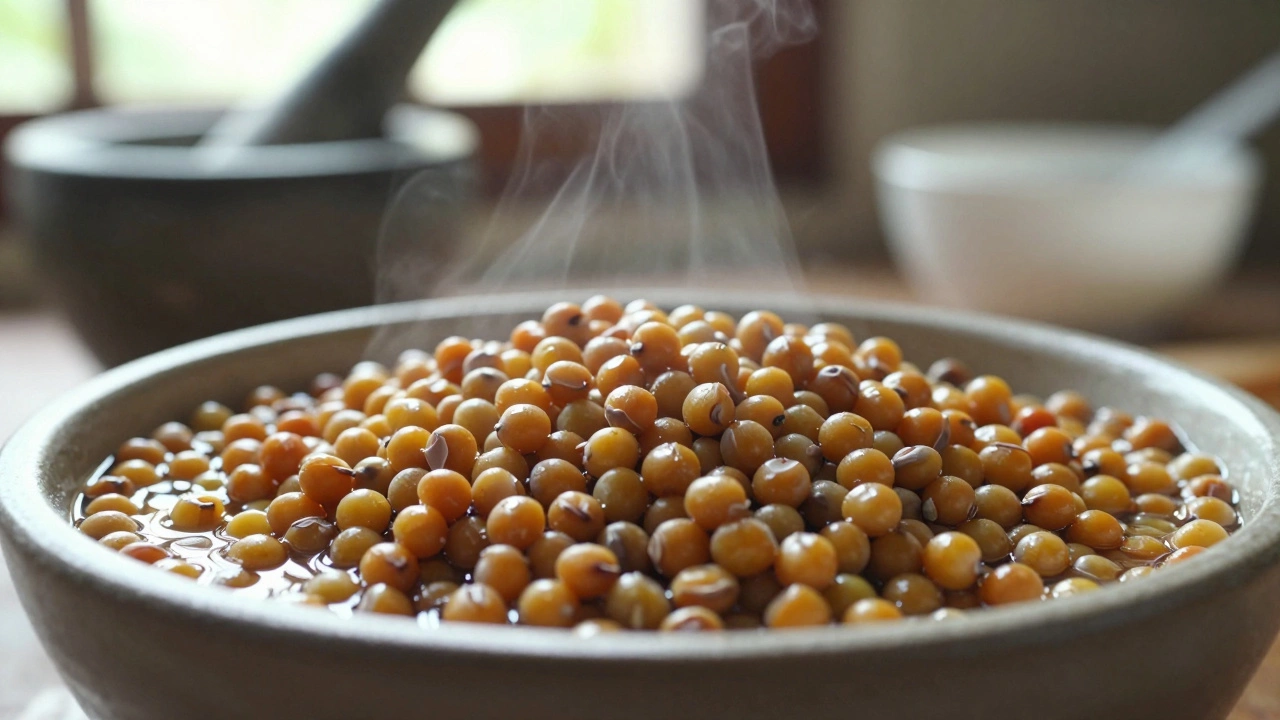
For the best dosa batter, soak urad dal for 6 to 8 hours. This is the standard across most South Indian households and professional kitchens. It’s long enough for the dal to double in size and become tender, but not so long that it starts fermenting in the water.
Start soaking in the morning if you plan to grind and ferment for lunch. Or soak at night for breakfast the next day. Use 1 part urad dal to 3 parts water-enough to cover it by at least 2 inches. The dal will swell, so don’t use a tiny bowl.
Some people soak for up to 10 hours in cooler climates like Auckland, where winter temps hover around 10°C. That’s fine-just check the texture. If the dal crushes easily between your fingers, it’s ready. If it’s still hard in the center, give it another hour.
What About Soaking Longer Than 8 Hours?
You might see recipes suggesting 12 hours or even overnight. That’s okay if you’re in a warm kitchen (above 25°C). But in cooler weather, longer soaks can lead to spoilage. The dal starts breaking down too early, releasing enzymes that make the batter slimy or bitter.
If you accidentally leave it soaking for 10+ hours, don’t panic. Rinse it well under cold water, drain, and grind immediately. You might need to add a pinch of salt or a teaspoon of fenugreek seeds (methi) to help with fermentation and reduce any off-flavors.
Urad Dal vs. Rice: Different Soaking Rules
Don’t soak urad dal and rice together. They need different treatment.
- Urad dal: Soak for 6-8 hours
- Rice (usually parboiled or idli rice): Soak for 4-6 hours
Always soak them separately. Rice takes less time because it’s harder and doesn’t swell as quickly. Mixing them in the same water can cause uneven hydration, which leads to poor grinding and inconsistent fermentation.
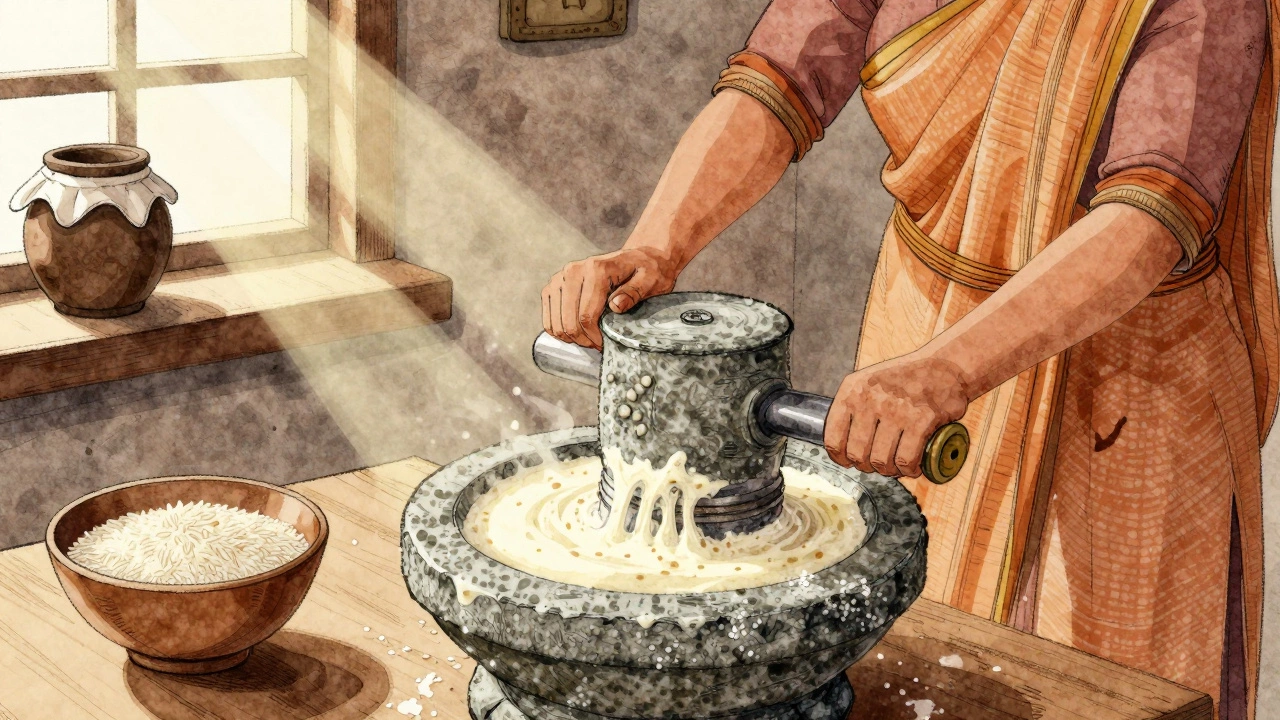
After soaking, drain both separately. Grind the urad dal first-it needs more water and whipping to get that fluffy, frothy texture. Then grind the rice separately with less water, until it’s smooth but not as airy.
Pro Tips for Perfect Soaking
- Use filtered or clean water. Chlorine in tap water can slow fermentation.
- Soak in a glass or ceramic bowl. Plastic can retain odors and affect taste.
- Don’t soak in direct sunlight. Warmth helps, but too much heat can spoil the dal before grinding.
- Wash the dal well before soaking. Rinse 2-3 times until the water runs clear. This removes dust and excess starch.
- Don’t add salt or baking soda during soaking. These interfere with natural fermentation.
- If you’re short on time, use warm water (around 30°C) for soaking-it can cut time by 1-2 hours.
What Happens If You Skip Soaking?
Some people try to save time by skipping the soak. You might think, “I’ll just grind it dry.” Don’t.
Dry urad dal won’t grind into a smooth paste. You’ll need way more water, which makes the batter too runny. Even if you manage to grind it, the batter won’t ferment. No bubbles. No rise. Your dosa will be flat, tough, and taste like raw lentils.
There’s no shortcut. Soaking isn’t optional-it’s non-negotiable for authentic dosa.
Regional Variations
In Tamil Nadu, many families soak urad dal for exactly 7 hours. In Karnataka, it’s common to soak for 8 hours and add a teaspoon of fenugreek seeds to help with fermentation. In Andhra, some add a pinch of rice flour to the soaked dal before grinding to make the batter crispier.
These aren’t just traditions-they’re tweaks based on local climate, water quality, and dal variety. If you’re in Auckland, stick to 6-8 hours. Adjust slightly based on your kitchen’s temperature. If it’s chilly, go for 8 hours. If it’s warm, 6 is enough.
How to Tell If Your Urad Dal Is Ready
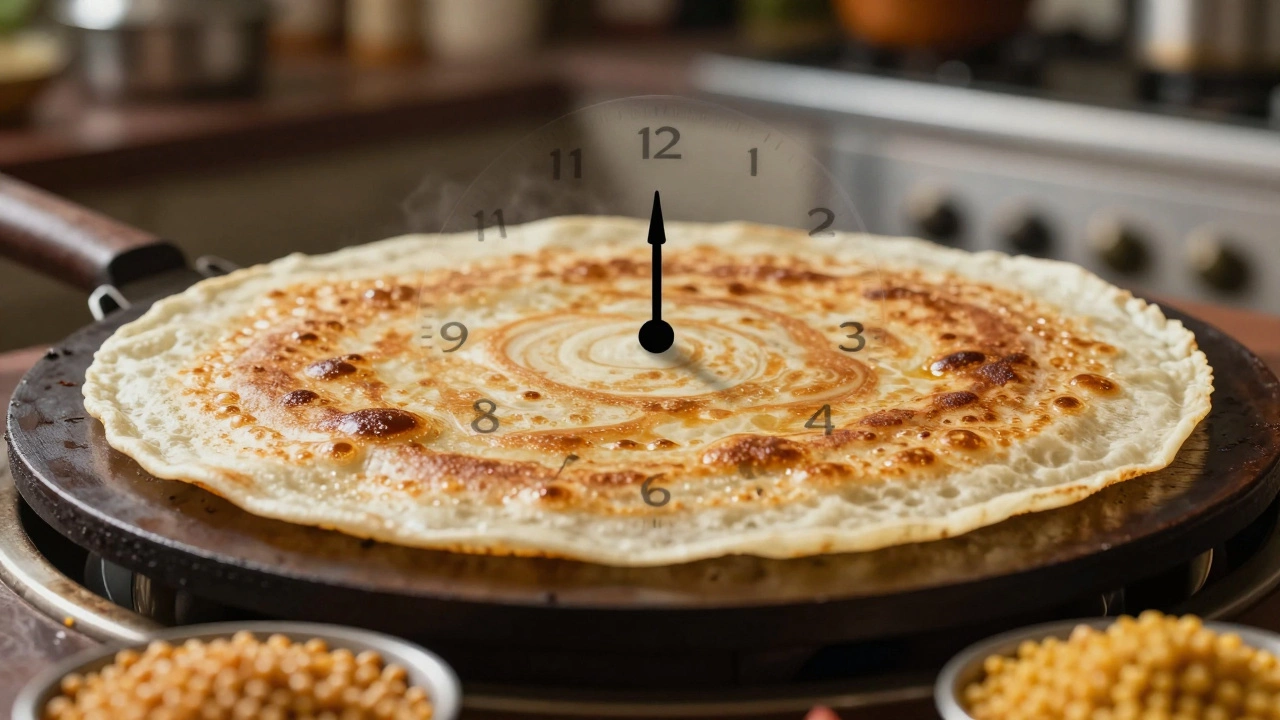
Don’t just rely on the clock. Check the texture:
- Look: The dal should look plump, almost twice its original size.
- Feel: Pinch a few grains. They should crush easily between your fingers, not crunch.
- Smell: It should smell neutral or slightly sweet. No sour, musty, or fermented odor yet.
If it smells sour before grinding, you’ve soaked too long. Rinse and proceed quickly.
What to Do After Soaking
Drain the dal thoroughly. Don’t pour the soaking water into the grinder-it can make the batter sticky or cause off-flavors. Use fresh, cool water for grinding.
Grind the urad dal slowly, adding water a little at a time. You want it to be light, fluffy, and full of air bubbles. It should form a thick, white foam when you lift the grinder blade. That’s your sign it’s ready.
Then mix it with the ground rice batter, cover, and leave it in a warm spot for 8-12 hours. In Auckland’s winter, place the bowl near a heater or wrap it in a towel. Fermentation needs warmth to work.
Common Mistakes and Fixes
- Mistake: Using old urad dal. Fix: Buy fresh dal from an Indian grocery store. Old dal doesn’t swell properly.
- Mistake: Soaking in metal bowls. Fix: Use glass or ceramic. Metal can react with the dal and affect taste.
- Mistake: Grinding too fast. Fix: Use low speed. High speed heats the dal and kills the natural enzymes needed for fermentation.
- Mistake: Adding too much water while grinding. Fix: Add water in small amounts. Better to have thick batter than watery.
If your batter doesn’t ferment after 12 hours, try adding a teaspoon of cooked rice or a pinch of crushed fenugreek seeds. These provide extra food for the bacteria.
Final Rule: Timing Is Everything
There’s no magic number. It’s not 5 hours. It’s not 12. It’s 6 to 8. That’s the range that works for 9 out of 10 home cooks, no matter where they live.
Master this step, and everything else-fermentation, grinding, cooking-falls into place. Your dosas will puff up, crisp at the edges, and taste like the ones you had in Chennai or Bangalore. No fancy gadgets. Just good soaking.
Next time you make dosa batter, set a timer. Soak for 7 hours. Grind. Wait. And watch your batter rise. That’s the real trick.
Can I soak urad dal for dosa overnight?
Yes, you can soak urad dal overnight if your kitchen is cool (below 20°C). In warmer climates, overnight soaking (10+ hours) can cause the dal to start fermenting too early, leading to sour or slimy batter. If you soak overnight, rinse it well before grinding and use it immediately.
Should I soak urad dal and rice together?
No. Urad dal and rice absorb water at different rates. Soaking them together leads to uneven texture. Always soak them separately-urad dal for 6-8 hours, rice for 4-6 hours. Drain and grind them separately too.
Why is my dosa batter not fermenting?
The most common reason is under-soaked urad dal. If the dal wasn’t soft enough before grinding, the batter won’t ferment properly. Other causes: cold kitchen (below 18°C), old dal, or using chlorinated water. Try adding a teaspoon of cooked rice or fenugreek seeds to kickstart fermentation.
Can I use a pressure cooker to speed up soaking?
No. Pressure cooking cooks the dal, which ruins its ability to ferment. Soaking is about hydration and enzyme activation, not cooking. Stick to room-temperature water for 6-8 hours.
How do I store soaked urad dal if I’m not grinding right away?
Drain it well, transfer to an airtight container, and refrigerate. It will keep for up to 12 hours. But don’t delay grinding-fermentation starts naturally after soaking. The sooner you grind, the better the texture and rise.