Paneer Yield & Ingredient Calculator
Configuration
Your Results
Estimated Paneer Yield
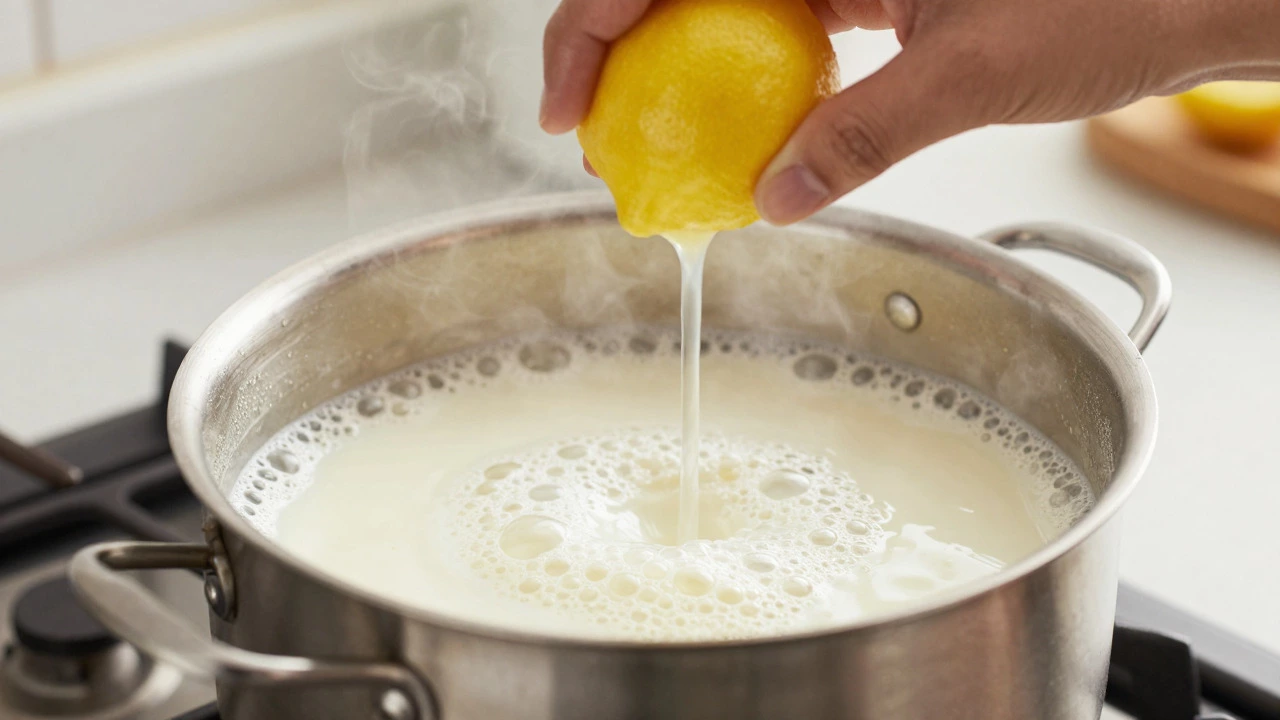
- Temperature: Heat milk to 80°C–90°C (175°F–195°F).
- Method: Add acid in 2-3 batches while stirring gently.
- Stop: Once whey is clear yellow/green and curds separate.
Enter your milk volume and preferences to see how much paneer you can make and what ingredients you'll need.
Have you ever poured a splash of lemon into warm milk and watched it instantly separate into white clumps and watery liquid? If you have, you’ve witnessed one of the most fundamental chemical reactions in cooking. But does adding lemon juice to milk make it curdle? Yes, it absolutely does. In fact, this simple reaction is the exact secret behind making homemade paneer, a fresh, non-melting Indian cottage cheese that holds its shape during cooking.
This isn't just a kitchen trick; it’s chemistry in action. When you introduce an acid like lemon juice to milk, you are changing the environment so drastically that the milk proteins can no longer stay suspended. They clump together, forming solid curds, while the remaining liquid becomes whey. Understanding why this happens-and how to control it-turns a curious experiment into a reliable method for creating some of the best ingredients in Indian cuisine.
The Chemistry of Curdling: Why Acid Changes Everything
To understand why lemon juice works, we need to look at what milk actually is. Milk is an emulsion, meaning it contains fat globules and proteins floating in water. The primary protein in cow's milk is called casein, the main structural protein found in mammalian milk. Normally, casein molecules are surrounded by tiny clusters called micelles. These micelles have a negative electrical charge, which causes them to repel each other, keeping the milk smooth and liquid.
When you add an acid, such as citric acid, a weak organic acid naturally present in citrus fruits like lemons from lemon juice, you increase the acidity of the milk. This lowers the pH level. As the pH drops, the negative charges on the casein micelles are neutralized. Without that repulsive force, the proteins start sticking together. They aggregate, trapping fat and water inside, forming visible solids known as curds. This process is called acid coagulation.
Heat plays a crucial supporting role here. Cold milk reacts slowly to acid. Warm or hot milk reacts quickly because heat destabilizes the protein structure further, accelerating the separation. For homemade paneer, you want this separation to happen fast and cleanly, which is why boiling milk is the standard starting point.
Lemon Juice vs. Vinegar: Choosing Your Acid
While lemon juice is the traditional choice in many Indian households, it isn’t the only option. White vinegar and citric acid powder are also commonly used. Each has distinct characteristics that affect the final texture and taste of your paneer.
| Acid Type | Taste Impact | Texture Result | Ease of Use |
|---|---|---|---|
| Lemon Juice | Mild, fresh citrus note if not drained well | Slightly softer, grainier texture | High (requires squeezing) |
| White Vinegar, a clear distilled vinegar with high acetic acid content | Sharp tang, but mostly rinses away | Firmer, more uniform blocks | Medium (easy to measure) |
| Citric Acid Powder, a dry crystalline form of citric acid often used in food preservation | No residual taste | Very firm, dense, and clean | Low (requires dissolving first) |
If you prefer a traditional approach, stick with fresh lemon juice. However, be aware that you may need slightly more volume compared to vinegar because the acidity varies between lemons. Vinegar provides a more consistent pH drop, often resulting in a firmer paneer block that is easier to cut into cubes for stir-fries. Citric acid is the professional’s choice for purity of flavor, but it requires precise measurement to avoid over-acidifying the milk, which can make the paneer rubbery.
Step-by-Step: Making Perfect Paneer at Home
Knowing the science is helpful, but execution is where the magic happens. Here is how to turn milk and lemon juice into perfect, soft yet firm paneer every time.
- Boil the Milk: Start with full-fat milk. Skim milk lacks the necessary fat to create a creamy texture. Heat the milk in a heavy-bottomed pot until it reaches a rolling boil. Stir occasionally to prevent scorching at the bottom.
- Cool Slightly: Once boiled, remove the pot from heat and let it cool for about 1-2 minutes. You want the temperature to be around 80°C to 90°C (175°F to 195°F). If it’s too hot, the proteins will tighten too aggressively, making the paneer hard. If it’s too cool, it won’t curdle properly.
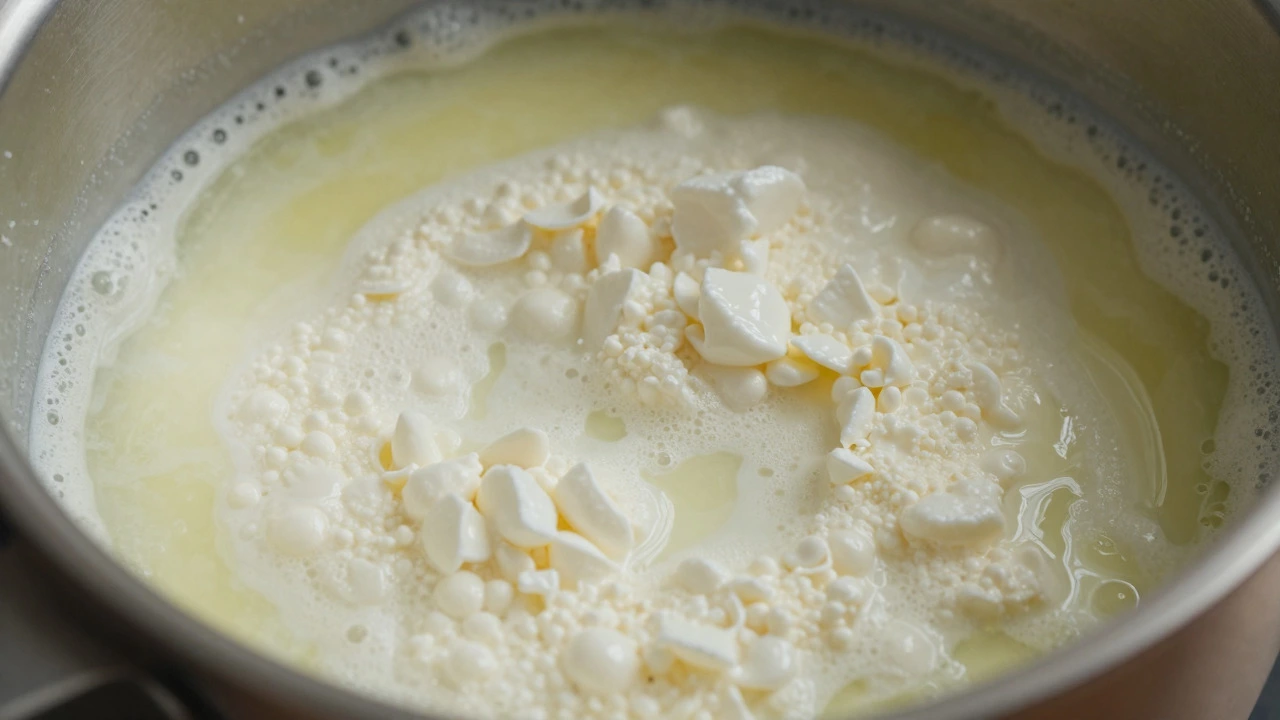
- Add the Acid: Squeeze your lemon juice into a small bowl. Add it to the milk in two or three batches, stirring gently after each addition. Watch closely. Within seconds, you should see the mixture split into white curds and greenish-yellow whey.
- Stop Immediately: As soon as the separation is complete and the whey looks clear, stop adding acid. Over-acidifying can make the paneer sour and tough.
- Strain: Line a colander with cheesecloth or a clean cotton muslin cloth. Pour the contents of the pot into the cloth. Tie the corners and hang it over a sink or place it in a bowl to drain for 10-15 minutes.
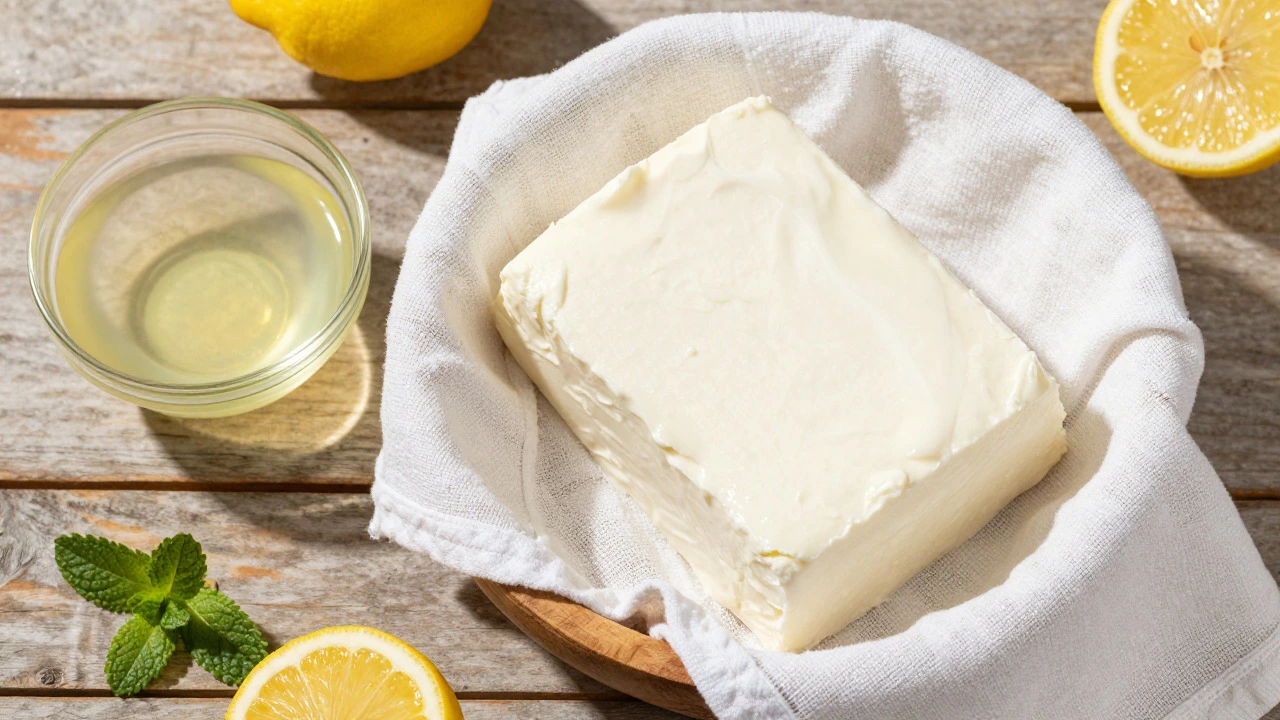
- Press: For firm cubes, place a weight (like a heavy pan or a few cans) on top of the wrapped paneer and let it press for 30-60 minutes. For softer, crumbly paneer suitable for koftas or stuffing, skip the pressing step.
Troubleshooting Common Issues
Even with the right recipe, things can go wrong. Here are the most common pitfalls when trying to curdle milk with lemon juice.
- Gritty Texture: If your paneer feels like sand, you likely added the acid too quickly or stirred too vigorously. Gentle folding motions help keep the curds large and soft. Also, ensure the milk wasn’t boiling violently when you added the lemon.
- Hard, Rubber Blocks: This usually means you pressed the paneer for too long or used too much acid. Try reducing the pressing time and check that you didn’t overshoot the curdling point. Using lower-fat milk can also contribute to a harder, less pliable result.
- No Separation: If the milk stays liquid, the temperature might have dropped too low before adding the acid, or your lemon juice was weak. Reheat the milk gently and try again. Ensure you’re using real lemon juice, not a flavored syrup.
- Sour Taste: If the paneer tastes distinctly of lemon, you haven’t drained it enough. Rinse the curds under cold running water while they are still in the cheesecloth before pressing. This washes away excess acid and stops the cooking process.
Storage and Shelf Life
Homemade paneer doesn’t contain preservatives, so it has a shorter shelf life than store-bought varieties. Keep it submerged in cold water in an airtight container in the refrigerator. Change the water daily to maintain freshness. Properly stored, homemade paneer lasts for 4-5 days. For longer storage, you can freeze it, though the texture will become slightly crumblier upon thawing, making it better suited for dishes like paneer tikka masala rather than fresh salads.
Beyond Paneer: Other Culinary Uses
The principle of acid coagulation extends beyond Indian cuisine. Ricotta cheese, for instance, is made by heating whey (the leftover liquid from making other cheeses) and adding vinegar or lemon juice to precipitate the remaining proteins. Similarly, farmers cheese and quark rely on similar acid-set methods. Understanding this basic reaction opens up a world of DIY dairy products that are cheaper, fresher, and free from unnecessary additives.
So, does adding lemon juice to milk make it curdle? Yes, and it does so reliably if you respect the balance of heat and acidity. Whether you are aiming for tender cubes for a butter paneer dish or soft crumbles for a dessert, mastering this simple transformation gives you control over one of the most versatile ingredients in the pantry.
Can I use bottled lemon juice for making paneer?
Yes, you can use bottled lemon juice, but check the label to ensure it contains only lemon juice and no added sugars or preservatives. Freshly squeezed juice is preferred because it has a more consistent natural acidity, but high-quality bottled juice works perfectly fine for curdling milk.
Why does my paneer turn out hard instead of soft?
Hard paneer is usually caused by pressing it for too long or using skim milk. Full-fat milk creates a creamier texture. Additionally, if you press the paneer for more than an hour, it will lose moisture and become dense. For soft paneer, reduce pressing time to 15-20 minutes or skip it entirely.
How much lemon juice do I need for 1 liter of milk?
Generally, you need about 2-3 tablespoons of lemon juice for 1 liter of milk. However, this varies based on the acidity of your lemons and the brand of milk. Always add the juice gradually and stop as soon as the curds separate clearly from the whey.
Can I make paneer with plant-based milk?
Traditional paneer relies on casein proteins found in animal milk. Plant-based milks like almond or soy lack these specific proteins, so they won’t curdle in the same way. While you can make tofu from soy milk using nigari or calcium sulfate, it is a different process and product than paneer.
Is the whey left over after making paneer useful?
Yes, whey is nutrient-rich and shouldn't be wasted. You can drink it directly, use it as a base for soups, or ferment it to make a probiotic beverage. It’s also excellent for watering plants, as it adds nitrogen and beneficial bacteria to the soil.