Indian Sweet Shelf Life Checker
Select a sweet or ingredient type below to check its estimated shelf life and proper storage methods.
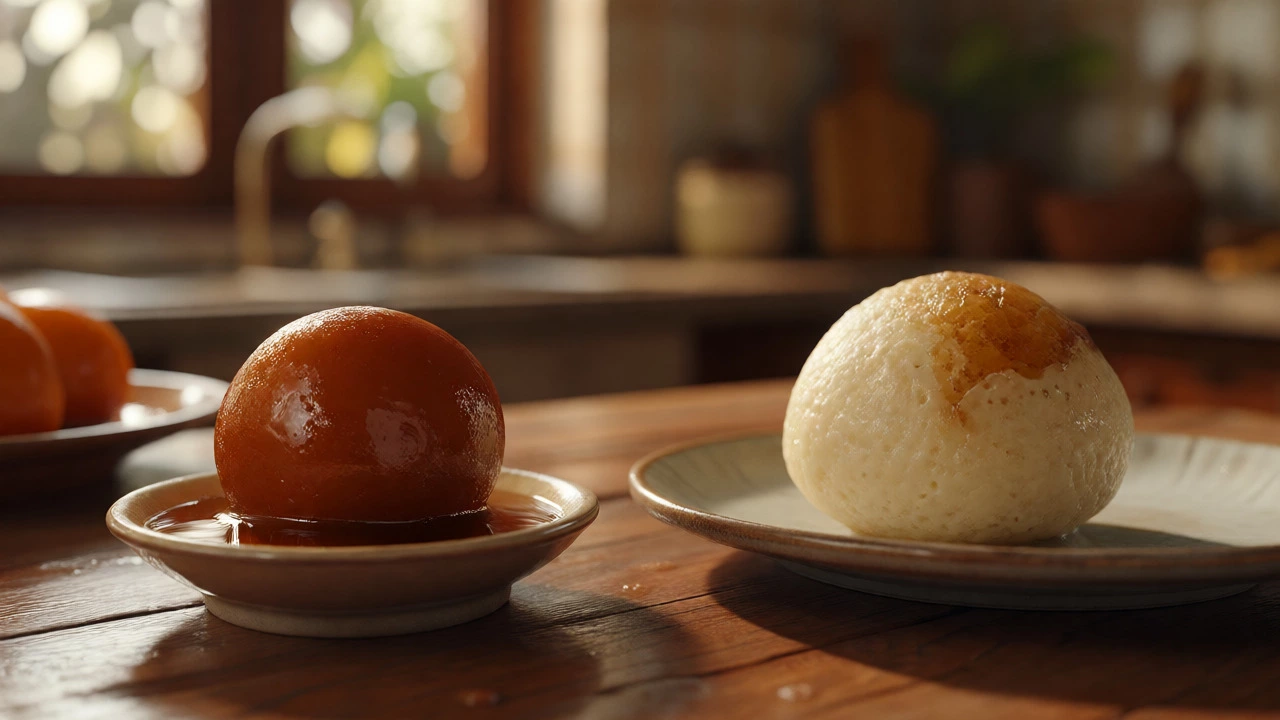
You bought a box of Kaju Katli and some Gulab Jamun. You left them on the counter for three days. Now you're staring at that shiny, syrupy ball wondering: is this still food, or is it science experiment?
Here’s the hard truth: yes, Indian sweets go bad. But not all of them expire at the same speed. Some are ticking time bombs in your fridge, while others can survive longer than your last relationship if stored right. The difference comes down to one thing: moisture.
The Moisture Rule: Why Milk Sweets Spoil Fast
Milk is the enemy of long-term storage. It’s rich in protein and water, which makes it a playground for bacteria. If your sweet has fresh milk, khoya (mawa), or cream as its base, you’re on a short clock. Think Rasgulla, Sandesh, and Rasmalai.
These sweets typically last only 24 to 48 hours at room temperature. After that, they start fermenting. You’ll smell it before you see it-a sour, yeasty odor that hits you when you open the container. If you leave Rasgullas out overnight in Auckland’s humid summer, don’t risk it. They turn into something closer to yogurt than dessert.
Khoya is essentially reduced milk solids. It’s dense but still holds enough moisture to spoil quickly. A box of Barfi made with fresh khoya needs the fridge. Always. No exceptions.
Dry Sweets: The Long-Lasting Heroes
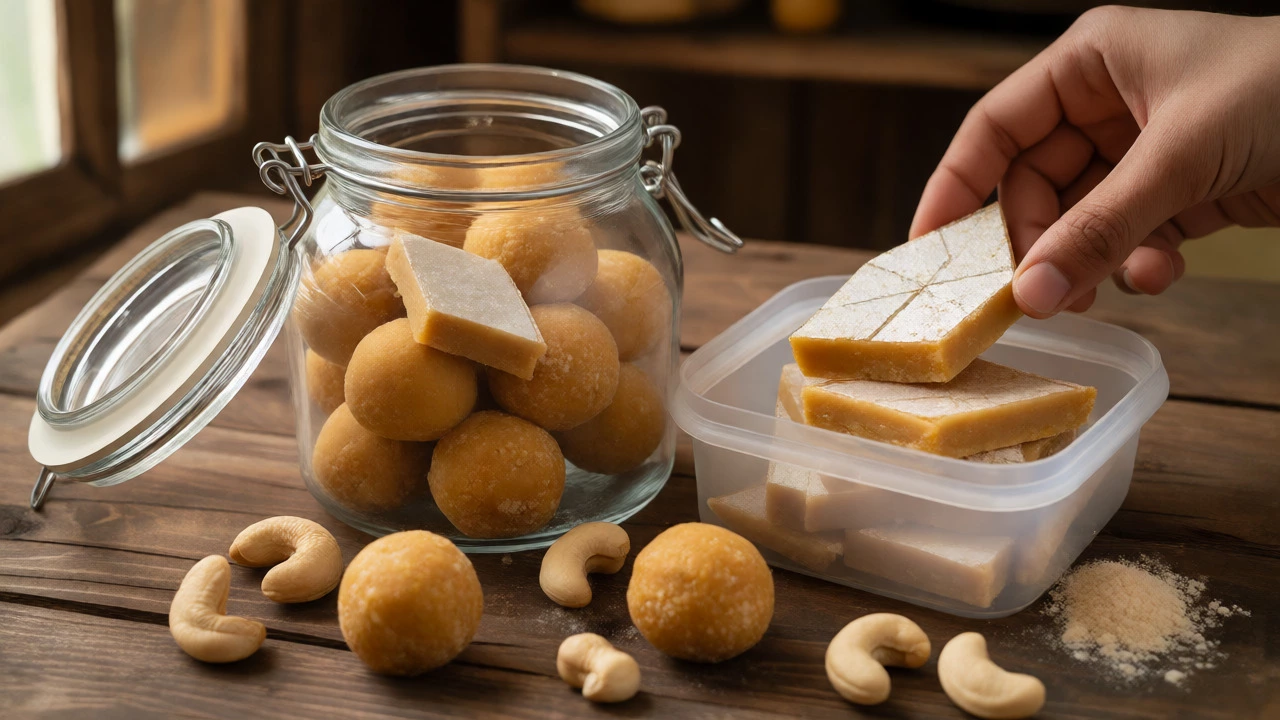
Not all mithai is fragile. Dry sweets, made with nuts, sugar syrup, and ghee, are built to last. These have low water activity, meaning bacteria can’t thrive easily. Examples include Ladoo, Barfi (made from dry fruits), and Chikki.
If you store these in an airtight container away from heat, they stay good for weeks. In fact, Besan Ladoo often tastes better after sitting for a day because the ghee settles into the flour. You can keep them at room temperature for up to two weeks. If you live somewhere hot, like Dubai or Mumbai, move them to the fridge to prevent the ghee from going rancid.
| Sweet Type | Base Ingredient | Room Temp Shelf Life | Fridge Shelf Life |
|---|---|---|---|
| Rasgulla / Rasmalai | Milk / Chenna | 12-24 hours | 3-5 days |
| Gulab Jamun | Milk Solids / Flour | 2-3 days | 1 week |
| Kaju Katli | Cashews / Sugar | 2-3 weeks | 1 month |
| Besan Ladoo | Gram Flour / Ghee | 2-3 weeks | 2 months |
| Jalebi | Flour / Syrup | 1-2 days | Not recommended |
The Ghee Factor: When Fats Go Rancid
Ghee is clarified butter. It’s stable, but it’s not immortal. Over time, exposure to air, light, and heat breaks down the fats. This process is called oxidation. You know ghee has gone bad when it smells like crayons or old paint. It might also taste bitter.
Sweets heavy on ghee, like Motichoor Ladoo or Halwa, are prone to this. If you buy a large jar of homemade ghee sweets, keep them in a cool, dark cupboard. Avoid storing them near the stove or in direct sunlight. Glass jars are better than plastic because they don’t absorb odors and seal tighter.
Pro tip: If your Ladoos feel greasy or oily on the surface, the ghee is separating. This isn’t always bad-it just means the emulsion broke. But if it smells off, toss it. Eating rancid fat won’t kill you, but it will ruin your appetite and potentially cause stomach upset.
Sugar Syrup: Preservative or Trap?
Sugar is a natural preservative. High concentrations draw water out of bacteria, stopping them from growing. That’s why jams and pickles last so long. Indian sweets use this principle too. Gulab Jamuns soaked in thick sugar syrup can last longer than dry ones because the syrup creates a barrier against air.
But here’s the catch: if the syrup is too thin, it becomes a breeding ground for mold. Thin syrup has high water content. Thick syrup (one-string consistency) protects the sweet. If you’re making sweets at home, ensure your syrup is properly cooked. Store-bought sweets often use stabilizers, but homemade ones rely purely on technique.
Watch out for crystallization. Sometimes sugar crystals form on top of Jalebis or Gulab Jamuns. This doesn’t mean they’re spoiled. It’s just sugar reforming. You can gently warm them to dissolve the crystals again. But if you see fuzzy spots-white, green, or black-that’s mold. Throw the whole batch away. Mold roots penetrate deeper than you think.
Signs Your Mithai Has Turned
Your nose is your best detector. Trust it over the date on the box. Here’s what to look for:
- Sour Smell: Indicates fermentation. Common in milk-based sweets like Sandesh or Kalakand.
- Crystallized Texture: Hard, gritty bits inside soft sweets. Usually safe, but unpleasant.
- Oily Sheen: Separated ghee. Check for rancidity by smelling.
- Mold Spots: Visible fuzz. Never scrape it off; discard the item.
- Discoloration: Darkening of white sweets like Rasgullas suggests bacterial growth.
If you’re unsure, take a tiny bite. If it tastes fizzy or acidic, spit it out. Fermentation produces carbon dioxide, which creates that fizz sensation. It’s not dangerous per se, but it’s definitely not the flavor profile you paid for.
How to Extend Freshness Like a Pro
You don’t need fancy equipment to keep sweets fresh. Just follow these simple rules:
- Airtight Containers: Oxygen is the enemy. Use glass or BPA-free plastic containers with tight lids. Vacuum sealing works wonders for dry sweets like Kaju Katli.
- Refrigerate Milk Sweets: Keep Rasgullas, Sandesh, and Rasmalai in the coldest part of your fridge. Let them come to room temperature before eating for the best texture.
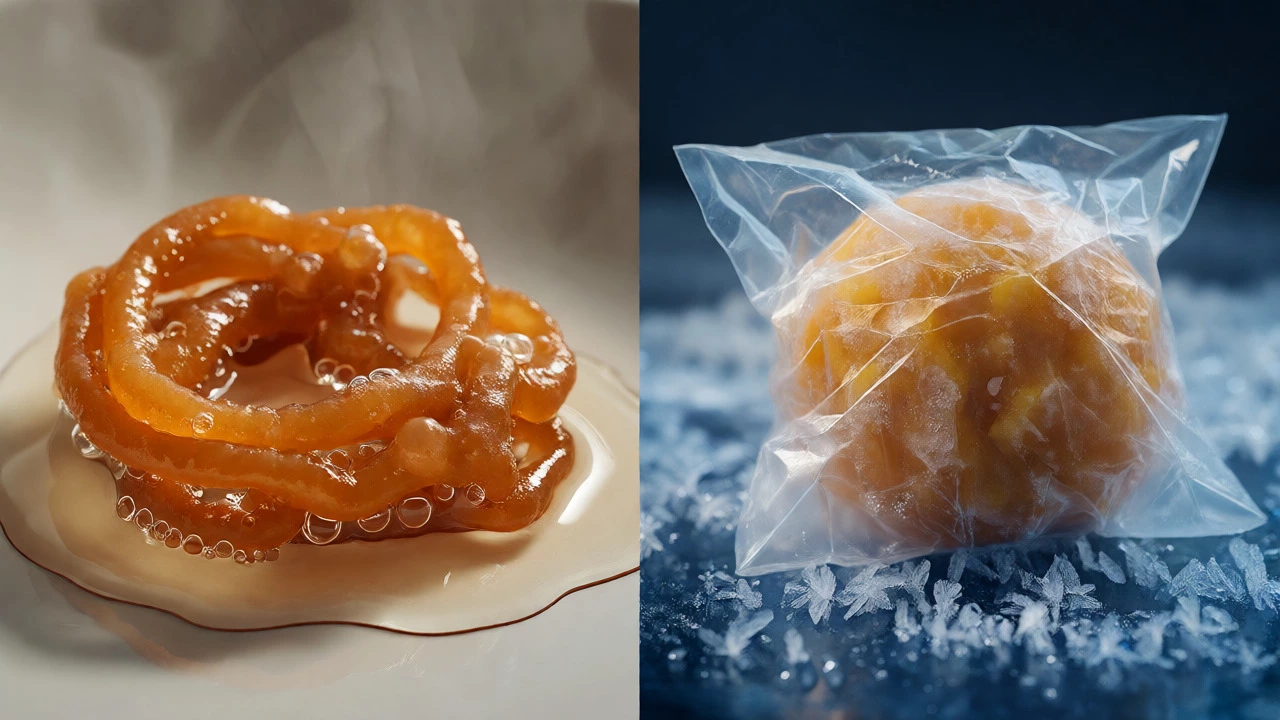
- Freeze for Long Term: Yes, you can freeze Indian sweets. Wrap each piece individually in cling film, then place them in a freezer bag. Thaw slowly in the fridge. This works great for Ladoos and Barfis.
- Keep Dry: Moisture from condensation can ruin dry sweets. Don’t put cold sweets straight into a sealed container if they’re sweating. Let them acclimate first.
- Separate Strong Flavors: Cardamom and rose water are potent. Store strongly flavored sweets separately from mild ones to avoid cross-contamination of aromas.
In Auckland, where humidity fluctuates, be extra careful with dry sweets. Our damp air can make crisp Jalebis soggy overnight. An airtight container is non-negotiable here.
What About Street Food Sweets?
Street food sweets are different. They’re made fresh and sold fast. Jalebis from a stall are meant to be eaten within minutes. If you bring them home, they lose their crunch immediately. Don’t try to store street-food Jalebis. Eat them there, or accept that they’ll become chewy.
Puri and Bhaji stalls sometimes sell leftover sweets at a discount. Ask how long they’ve been sitting out. If they’ve been under a heat lamp for more than four hours, skip them. Warmth accelerates bacterial growth. Cold sweets from a refrigerated display case are safer bets.
DIY vs. Store-Bought: Which Lasts Longer?
Store-bought sweets often contain preservatives like potassium sorbate or citric acid. These extend shelf life significantly. Homemade sweets lack these chemicals, so they spoil faster. If you make Khoya at home, use it within two days. If you buy packaged Khoya, check the expiry date.
Commercial producers also control hygiene strictly. Home kitchens vary. If you’re sensitive to food safety, stick to reputable brands for milk-based sweets. For dry sweets, homemade is usually fine and tastier.
Final Verdict: To Eat or Not to Eat?
Indian sweets are perishable. Treat them like dairy products, not candy bars. When in doubt, throw it out. A few dollars saved isn’t worth a night of nausea. Respect the ingredients, store them smartly, and enjoy them while they’re fresh.
Can I eat expired Indian sweets?
If the sweets are past their printed date but show no signs of spoilage (no mold, sour smell, or unusual texture), they are likely safe. However, quality degrades over time. Milk-based sweets should never be eaten past their date without checking thoroughly.
Why did my Gulab Jamun get hard?
Gulab Jamuns harden when exposed to air. The moisture evaporates, causing the outer layer to dry out. To fix this, soak them in warm sugar syrup for 10-15 minutes before serving. This rehydrates them and restores softness.
Does refrigerating sweets change their taste?
Yes, especially for ghee-based sweets. Cold temperatures solidify ghee, making the sweet feel waxy in the mouth. Let refrigerated sweets sit at room temperature for 30 minutes before eating to restore their creamy texture.
How do I know if ghee in sweets is rancid?
Rancid ghee smells like old paint, crayons, or stale nuts. It may also taste bitter or metallic. If your Ladoo or Halwa has this smell, discard it. Rancid fats can cause digestive issues and inflammation.
Can I freeze Rasgulla?
It’s possible but not recommended. Freezing changes the texture of chenna (cottage cheese), making it grainy or spongy. Rasgullas are best enjoyed fresh or within 2-3 days of refrigeration. If you must freeze them, thaw slowly in the fridge and serve chilled.